Managed service providers (MSPs) manage billing for their clients across an increasingly fragmented landscape. Organizations deploy workloads across AWS, Azure, Google Cloud, private data centers, and hybrid environments, and each has unique pricing models and billing cycles. Relying on single-cloud billing solutions is no longer enough because they fail to provide the unified visibility and granular cost allocation that is critical for accurate client invoicing. Worst of all, inefficient billing degrades margins, fuels client churn, and stalls growth for scaling MSPs.
The fix lies in modern cloud billing platforms. These solutions effortlessly handle diverse infrastructure (from EC2 instances to complex Kubernetes clusters and serverless functions) while automating cost allocation, tracking usage in real time, and generating detailed reports.
This article breaks down the essential features of cloud billing solutions, discusses implementation strategies, and covers the practical hurdles that MSPs face when navigating complex multi-cloud environments.
Summary of the best practices for MSPs implementing cloud billing solutions
| Best practice | Description |
|---|---|
| Implement multi-cloud data collection | Cloud billing platforms aggregate usage data from multiple providers, normalize pricing models, and provide unified cost visibility across public clouds, private infrastructure, and SaaS applications through API integrations and automated data collection. |
| Multi-Tier Hierarchy Management | Parent-child organizational structures supporting distributor -> reseller -> end customer chains, with delegated administration, isolated billing views, and consolidated roll-ups that reconcile to hyperscaler invoices. |
| Margin Control and Masking | Rate card management that allows distributors to hide wholesale buy rates from downstream partners while enabling resellers to apply their own markups, protecting margin economics at each tier. |
| Design hierarchical cost allocation models | Automated tagging strategies, resource hierarchies, and allocation rules enable accurate cost distribution by client, project, or department using percentage-based, usage-based, and fixed-cost allocation methods with detailed audit trails. |
| Credit and Incentive Distribution | Programmatic allocation of promotional credits, service credits, and vendor-funded incentives across partner hierarchies with configurable pass-through, retention, or sharing rules per credit type. |
| Configure real-time monitoring and alerts | Continuous data collection from cloud APIs, infrastructure monitoring tools, and application metrics provides near-real-time cost visibility with configurable alerts for budget overruns and unusual spending patterns. |
| Automate billing workflow processes | Integration with existing billing systems, invoice generation, and payment processing automates the entire billing cycle, from usage collection to client invoicing, reducing manual overhead and billing errors. |
| Deploy advanced analytics and reporting | Comprehensive dashboards, custom reports, and cost optimization insights help MSPs identify spending trends, optimize resource allocation, and provide transparent cost breakdowns to clients with configurable granularity levels. |
| Establish integration governance frameworks | Cloud billing solutions require robust API connectivity to multiple cloud providers, monitoring systems, and business applications, with proper authentication, rate limiting, and error handling to ensure reliable data collection. |
Stop losing time (and margins) to spreadsheets and manual reconciliation. CloudBolt’s Cloud Billing Platform gives you accuracy, automation, and control at scale—so you can focus on growing your business, not fixing billing errors.
Multi-cloud billing architecture fundamentals
Building a robust cloud billing platform starts with tackling the most fundamental challenge: consistently collecting, normalizing, and storing cost data from fundamentally disparate sources.
Data collection strategies
Cloud billing platforms rely on three primary methods to capture data:
- API integrations pull usage from provider billing APIs.
- Agent-based monitoring offers real-time visibility from inside the infrastructure.
- Webhooks enable fast, event-driven collection.
The true hurdle is handling rate limits. AWS Cost Explorer, for instance, caps you at 100 calls per hour per account. When you’re an MSP managing hundreds of accounts, handling this requires careful orchestration and intelligent caching strategies.
The following Python logic illustrates how to manage this throttling gracefully. This function retrieves daily AWS cost data, grouped by service and project tags. It implements exponential backoff when the Cost Explorer API rate limit is exceeded by waiting 60 seconds before retrying the request.
python
import boto3
from datetime import datetime, timedelta
import time

def fetch_aws_costs(account_id, start_date, end_date):
    """
    Fetch AWS cost data with rate limit handling
    """
    client = boto3.client('ce', region_name='us-east-1')

    try:
        response = client.get_cost_and_usage(
            TimePeriod={
                'Start': start_date.strftime('%Y-%m-%d'),
                'End': end_date.strftime('%Y-%m-%d')
            },
            Granularity='DAILY',
            Metrics=['UnblendedCost'],
            GroupBy=[
                {'Type': 'DIMENSION', 'Key': 'SERVICE'},
                {'Type': 'TAG', 'Key': 'Project'}
            ]
        )
        return response['ResultsByTime']
    except client.exceptions.LimitExceededException:
        # Implement exponential backoff
        time.sleep(60)
        return fetch_aws_costs(account_id, start_date, end_date)
Cost normalization across providers
Every cloud provider uses a different clock: AWS charges by the second, Azure bills hourly for VMs, and Google Cloud offers per-second billing. To achieve a single source of truth, you must standardize time periods, handle messy currency conversions, and correctly account for discount calculations, including reserved instances (RIs) and committed use discounts (CUDs).
Resource discovery and inventory management
You can’t bill what you can’t see, which is why automated resource discovery is needed for keeping your inventory of billable assets current. Discovery, in turn, hinges on strong tagging strategies that correctly identify ownership and cost centers. A modern platform automatically flags untagged resources before costs accumulate.
Data storage and retention policies
Billing data explodes quickly: An MSP with 500 accounts across three clouds can easily generate millions of records monthly. To balance speed and cost, organizations must tier their storage: recent data (e.g., used within 90 days) may live in hot storage for rapid querying, while historical data is migrated to warm or cold storage for long-term compliance.
Security and access control
In a multi-tenant environment, cross-client data exposure is a catastrophic risk. Your system needs robust role-based access control (RBAC) to ensure that finance, engineering, and executive teams only see the data relevant to their roles. Furthermore, cloud provider API credentials must be secured using tools like HashiCorp Vault or AWS Secrets Manager, with mandated, automated rotation every 90 days.
CloudBolt helps MSPs and distributors automate billing from end to end, eliminating manual reconciliation and unlocking margin protection at scale.
Explore Reselling & Distribution Capabilities to see how.
Multi-Tier Hierarchy Management
Distribution business models require organizational hierarchies where a master distributor account manages multiple tier-1 reseller partners, each managing their own downstream MSP or direct customer accounts. The billing platform must model these parent-child relationships with proper data isolation—tier-1 partners see only their own sub-hierarchy while the distributor maintains consolidated visibility across the entire tree.
This architecture demands role-based access control that grants partner administrators the ability to manage their own downstream accounts, pricing rules, and reporting views without exposing sibling partner data or distributor-level margins. Each hierarchy node needs its own usage aggregation, applying different rate cards and markups as costs flow from hyperscaler invoice through distributor pricing through reseller markup to end customer bill.
Key operational requirements:
- Delegated administration allows tier-1 partners to create and manage their own downstream customer accounts with configurable permission boundaries that prevent access to distributor or peer partner data
- Isolated billing views present each hierarchy level with usage, costs, and invoices scoped to their managed accounts while maintaining audit trails that reconcile to parent-level aggregations
- Roll-up reconciliation validates that summed child account charges match parent-level totals, with variance reporting to catch allocation errors, missed accounts, or pricing rule conflicts
Margin Control and Masking
Distributor economics depend on buying cloud services at negotiated wholesale rates and reselling through partner channels at marked-up retail prices. The billing platform must allow distributors to define separate buy-side and sell-side rate cards—internal cost tracking uses wholesale rates from hyperscaler agreements while customer-facing invoices apply retail pricing that includes distributor and reseller margins.
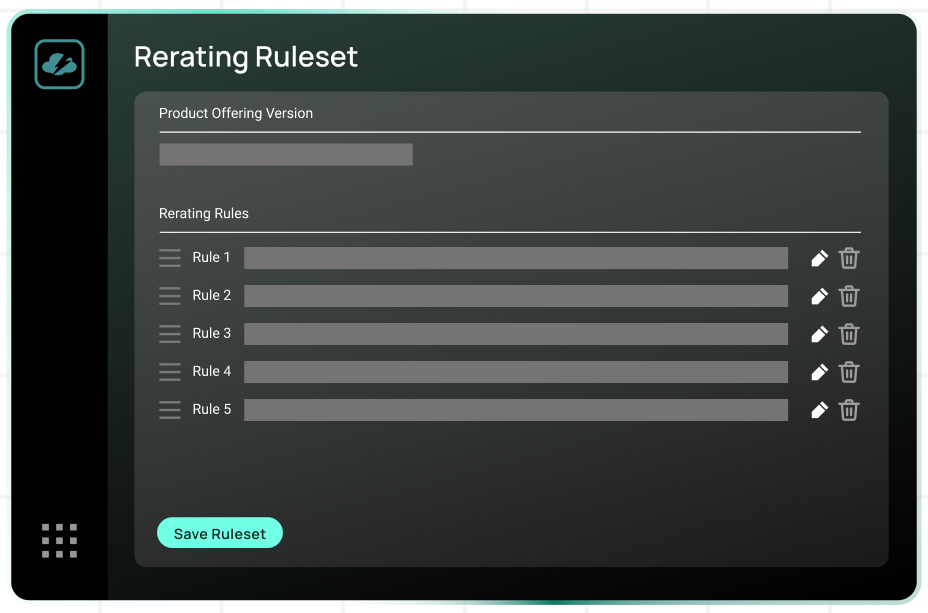
Margin masking ensures that tier-1 resellers see only the rates they pay to the distributor, not the underlying wholesale buy rates. This protects distributor economics while giving resellers the flexibility to apply their own markups when billing end customers. The platform manages this through layered pricing rules where each hierarchy level has visibility only to its direct costs, not parent-level wholesale rates or sibling partner pricing.
Key operational requirements:
- Layered rate cards define pricing at each hierarchy tier with inheritance rules that allow distributors to set base rates, resellers to apply markups, and both to override specific services independently
- Margin calculation tracks actual margin at each tier by comparing buy rates to sell rates, with reporting views that show distributor retention, partner markup, and blended margin across the hierarchy
- Rate card versioning maintains pricing history with effective date ranges, allowing mid-month rate changes without recalculating prior charges or creating invoice discrepancies
Credit and Incentive Distribution
Hyperscalers issue promotional credits for new account sign-ups, service credits for SLA breaches, and vendor-funded incentives tied to migration projects or consumption milestones. Distributors must route these credits through their partner hierarchies according to business rules—some credits pass through to end customers, others are retained at the distributor level, and still others are split between tiers based on negotiated agreements.
A billing platform needs workflows to import credits from hyperscaler systems, classify them by type and eligibility rules, then apply allocation logic that determines which accounts receive credit offsets on their invoices. This includes handling partial credits where a $10,000 promotional balance might be distributed as $3,000 to the distributor, $2,000 to the tier-1 reseller, and $5,000 to the end customer based on contractual terms.
Key operational requirements:
- Credit import and classification automatically ingests credit balances from hyperscaler APIs, categorizing them as promotional, service level, or incentive-based with different handling rules for each type
- Allocation workflows define pass-through policies (retain, distribute, or split) per credit type and customer account, with approval steps for high-value credits or non-standard distributions
- Credit application tracking maintains audit logs showing credit source, allocation decision, applied amount per invoice, and remaining balance to ensure credits are fully utilized before expiration
Implementing cost allocation and chargeback
Cost allocation is where raw spending turns into actionable insights and client accountability. The process must be transparent, auditable, and flexible enough to adapt to diverse business structures.
Tagging strategies and governance
Consistent resource tagging is non-negotiable for accurate cost allocation. A successful strategy requires tags for environment, project, cost center, and owner.
Enforcement is the real challenge. Many high-maturity teams implement tag validation in CI/CD pipelines, blocking resource creation if required tags are missing. Tools like AWS Organizations and Azure Policy enforce these requirements at the account level, often using structured policies, as shown in this example:
json
{
  "TagPolicy": {
    "Version": "1.0",
    "RequiredTags": [
      {
        "Key": "Environment",
        "Values": ["Production", "Staging", "Development"]
      },
      {
        "Key": "Project",
        "EnforceCase": true
      },
      {
        "Key": "CostCenter",
        "ValidationPattern": "^CC-[0-9]{4}$"
      }
    ]
  }
}
Hierarchical cost structures
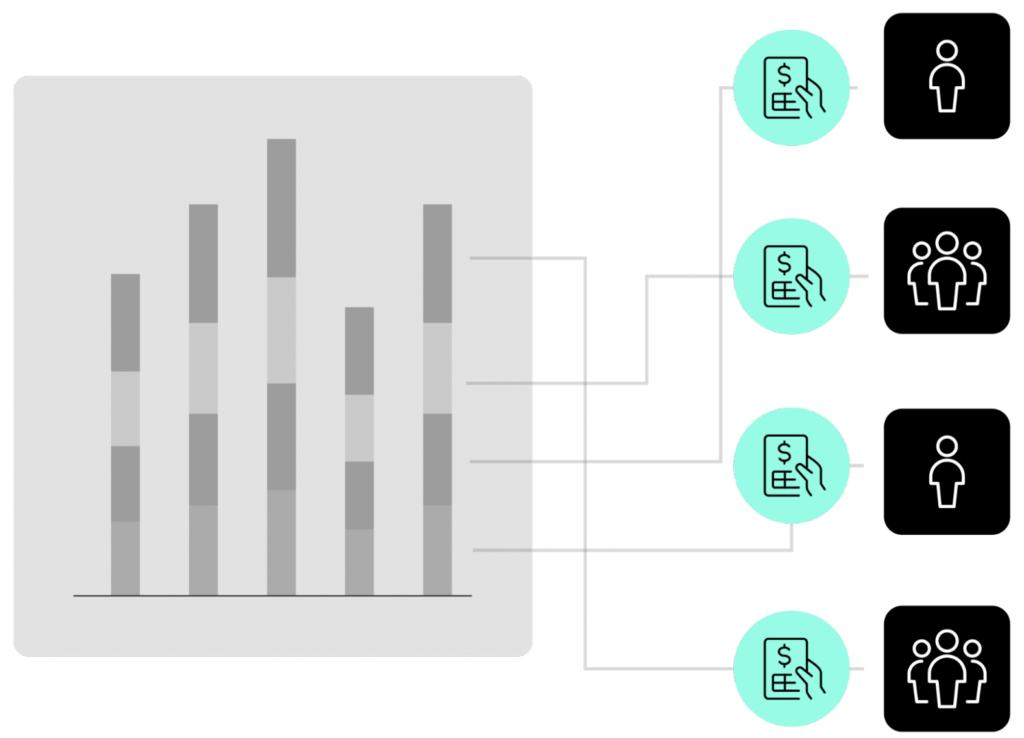
Most businesses operate with a hierarchical structure: business units contain departments, which in turn contain teams. Your allocation system must mirror this structure by defining parent-child relationships and establishing rules for how shared costs are proportionally distributed up the chain.
Allocation rule engines
Not all costs are created equal. Direct costs (like a dedicated EC2 instance) are easy—allocate them based on a tag. Shared costs (like a NAT gateway, DNS, storage, or Kubernetes infrastructure components) require more nuance. Your engine needs the intelligence to use percentage-based or usage-driven distribution while also handling edge cases like untagged resources or ownership changes mid-month.
Shared resource handling
Shared infrastructure (network components, monitoring tools, etc.) benefits multiple projects, and simple percentage splits rarely reflect actual consumption. Sophisticated platforms track usage metrics; for a shared database cluster, allocation might be based on query volume or CPU consumption. In Kubernetes, costs are typically allocated based on pod resource requests using specialized tools like Kubecost.
Audit trails and compliance
Every single cost allocation decision must be fully traceable. This is vital during client billing disputes or internal investigations into cost spikes. The system must maintain a complete history of allocation rule changes, tag modifications, and manual adjustments, noting who made the change, when, and the business justification. For regulated sectors, these logs may need seven-year retention.
Real-time monitoring and alerting systems
Waiting until the monthly bill arrives means remediation opportunities are already lost. Real-time monitoring is essential for proactive cost management.
Usage data collection frequency
You must balance visibility against system load. Hourly collection is generally a good balance for most use cases, but high-cost or critical production environments may warrant more frequent monitoring. The frequency should also vary by resource type—high-cost database instances need more attention than inexpensive Lambda functions.
Anomaly detection algorithms
Simple threshold-based alerts generate too many false positives to be useful. Modern platforms deploy machine learning (ML) to understand normal spending patterns and flag only statistically significant deviations. These algorithms intelligently account for cyclical patterns (weekend versus weekday), seasonal trends, and natural growth trajectories.
Budget management workflows
Effective budgeting goes beyond alerts. When spending nears limits, the system should trigger approval workflows for stakeholders, notify the relevant teams, and, for teams needing ironclad control, optionally enforce hard stops that prevent new resource creation until the budget is reviewed.
Integration with ITSM platforms
Billing anomalies are often symptoms of technical issues. Integration with ITSM platforms like ServiceNow or Jira enables automatic ticket creation when a cost anomaly is detected. This ensures that unexpected costs trigger both a financial review and a technical investigation, providing context on the resources driving the cost, the baseline comparison, and team ownership.
Performance monitoring correlation
Cost data is most actionable when correlated with performance. Integrating billing data with APM tools like Datadog helps teams understand the true relationship between spending and business outcomes. This enables optimization decisions that successfully balance cost efficiency with performance requirements.
Automated billing workflow implementation
Manual billing processes are the primary bottleneck for scaling MSPs. Automation reduces errors, accelerates invoice generation, and ensures consistency.
A modern BillOps platform executes a comprehensive, end-to-end workflow:
- Ingest usage data from all sources.
- Normalize raw data into a unified cost structure.
- Apply client-specific pricing logic, margins, and contract terms.
- Generate branded, customized invoices.
- Sync billing data with accounting/ERP systems.
- Deliver transparency via client self-service portals or detailed reports.
- Track changes and approvals for auditability.
ERP and CRM integration
Your cloud billing platform must be a team player. Integration with ERP systems (like NetSuite) ensures that cloud billing flows correctly into the general ledger. CRM integration keeps customer records synchronized with payment history and billing status. The billing system becomes the system of record for usage but defers to the ERP for financial and tax policies.
Invoice generation and customization
Clients demand different formats—some need a service category summary, others need a detailed line-item breakdown. The system must support multiple invoice templates while ensuring consistency. Customization includes branding, currency handling, and automatic generation at month end, with the flexibility for manual, mid-cycle billing.
Payment processing automation
Automating payment collection is critical for cash flow. Integration with payment gateways enables the handling of credit card and ACH processing, complete with automatic retry logic for failures. For enterprise clients, the system must support tracking purchase orders and net payment terms.
Dispute resolution processes
Billing disputes are inevitable, so the platform must provide tools to quickly investigate charges, allowing drill-down to resource-level details, tag history, and allocation decisions. Once resolved, the system must support credit memos and adjustments while maintaining a full audit trail. For regulatory compliance (SOX, GDPR), the platform needs built-in features for audit logging, data encryption, and automated retention policies.
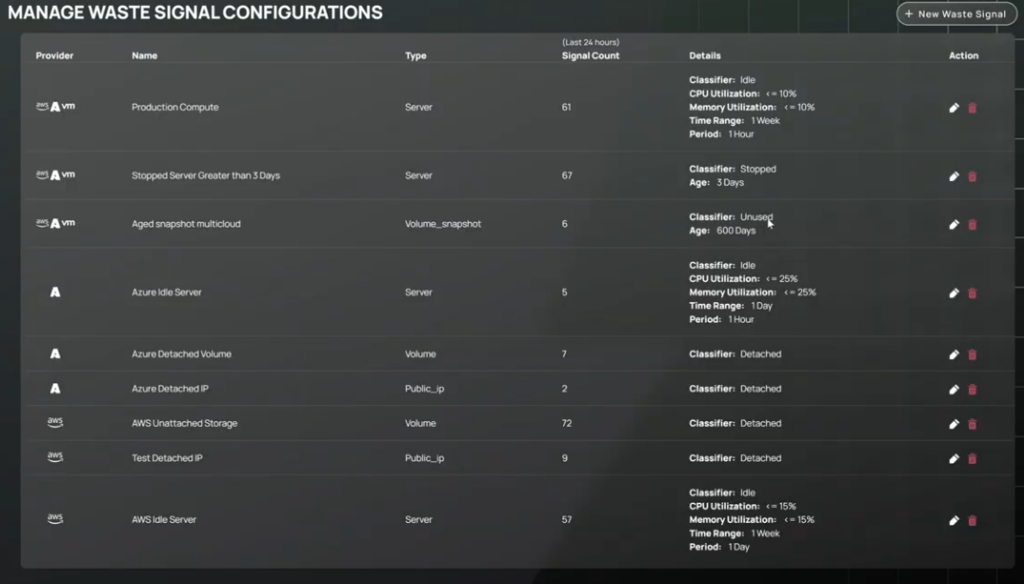
CloudBolt’s Policy Configurations feature offers a simple drag-and-drop interface for automating the elimination of idle resources.
The Waste Signal Configurations option enables you to customize the telemetry settings used by the CloudBolt platform to identify underutilized resources. Policy Configuration then uses this data to identify and recommend actions for specific services, helping you manage resources efficiently and effectively.
Advanced reporting and analytics
Raw billing data is just a set of numbers until you analyze and visualize it. Advanced reporting transforms cost data into strategic business information.
The MSP role has shifted from simple billing aggregation to becoming a strategic partner focused on FinOps—helping clients understand and optimize their cloud spend. Reporting capabilities that provide optimization insights are what differentiate a modern MSP.
Custom dashboard creation
Different stakeholders require different views. Executives need spending trends, finance needs allocation breakdowns, and engineering needs resource-level costs and optimization recommendations. Role-based dashboards ensure that every user sees relevant, interactive information that allows them to drill down from a summary view to the detailed line items.
Predictive cost modeling
Historical spending patterns allow for accurate forecasting. Machine learning models predict future spending by analyzing usage trends and seasonal patterns, becoming more precise when fed planned changes (like infrastructure migrations or new campaign launches).
ROI analysis tools
Cloud spending must generate business value. ROI analysis correlates infrastructure costs directly with business metrics—revenue, user growth, or transaction volume. This helps clients make optimization decisions that balance cost efficiency with performance outcomes. For example, explicitly showing that a 20% database capacity increase led to a 15% revenue increase.
Client-facing portals and data export
Self-service portals are a requirement, giving clients immediate, transparent access to their usage, cost breakdowns, and trends without MSP intervention. Simultaneously, the platform needs robust data export capabilities (CSV, JSON, and API access) for clients who want to feed the billing data into their own BI tools (Tableau, Power BI).
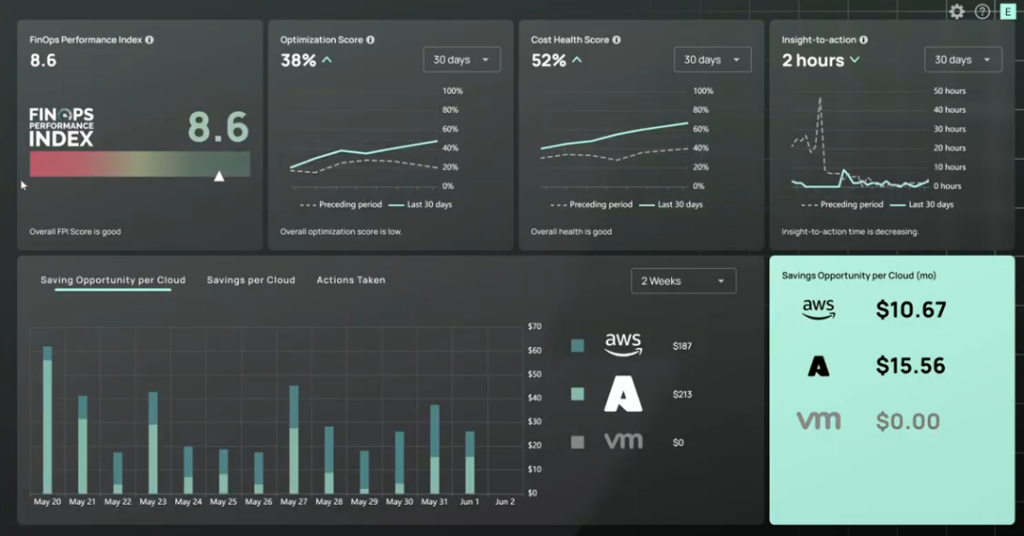
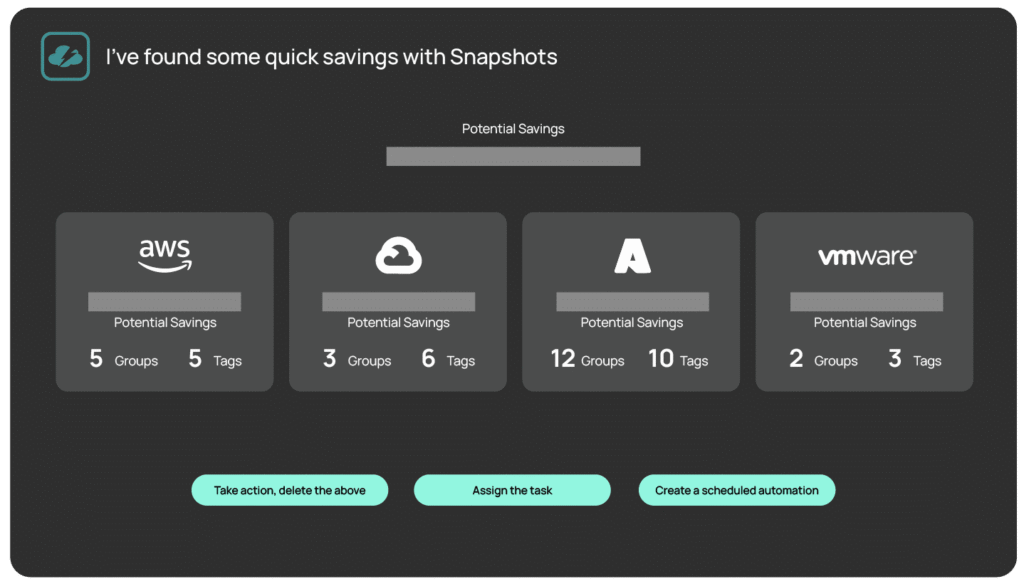
CloudBolt enhances native governance capabilities by providing a unified platform for advanced reporting across hybrid environments. Its conversational AI interface lets stakeholders at different organizational levels access relevant cost insights.
Integration challenges and best practices
Building and maintaining reliable connections to multiple cloud providers presents an ongoing operational challenge.
API rate limiting strategies
Every provider imposes limits. Strategies must include:
- Request queuing: Batching and ordering API calls
- Exponential backoff: Intelligent retries after a throttling error
- Intelligent caching: Minimizing redundant calls
For MSPs, the key is distributing requests across time to avoid the concentrated bursts of API calls that typically trigger rate limits.
Data quality and validation
Billing accuracy hinges on data quality. Validation checks should run at every stage—collection, normalization, and allocation. The system must flag missing tags, orphaned resources, or discrepancies before they ever impact a client invoice. Automated reconciliation is non-negotiable.
Disaster recovery planning
Billing data is mission-critical business information requiring robust backup procedures with clearly defined recovery objectives. Regular DR testing ensures that procedures work when needed.
Scalability and vendor lock-in considerations
As your MSP grows, the billing system must scale. Implement database partitioning, caching layers, and asynchronous processing to manage data volume. To mitigate vendor lock-in, prioritize platforms that use open standards for data storage, maintain strong export capabilities, and avoid proprietary APIs. Data portability is crucial for future platform flexibility.
The MSP landscape is shifting fast. Hear experts discuss how to deliver what customers want most: better cloud spend optimization, automation, and multi-cloud flexibility.
Final thoughts
Multi-cloud billing demands robust technical solutions and disciplined operational processes. The architecture must handle diverse data, normalize pricing models, and provide unified, accurate visibility, all in real time.
Successful implementations are built on automation, reducing manual overhead and minimizing errors to enable MSPs to scale without proportional staff increases. Ultimately, effective cloud billing is not just an operational necessity; it’s a strategic capability. When properly analyzed, billing data provides critical insights into client profitability, resource efficiency, and optimization opportunities that drive competitive advantage.


Related Blogs

The Kubernetes Automation Trust Gap No One Talks About
CloudBolt Research Report — March 2026 The Kubernetes Automation Trust Gap No One Talks About The selective distrust of autonomous…