AI and Performance Engineering: How can AI be used to predict all the possible configuration options – and which will, and will not, deploy successfully?

Efficient application performance. It sounds great, right? As engineers and developers, it’s what we’re all striving for. Unfortunately, when it comes to Kubernetes applications, it’s not that easy. There are so many variables and configuration options, when it comes to tuning applications, how can you know which configuration will deliver the desired outcome (and trade-offs) for performance, resource optimization, and cost? And, even if you could manually tune cloud native applications efficiently given the talent and resources available in your organization, how will you know which configurations will deploy successfully? Or, something that can be even more valuable, learn which configurations will fail?
Here’s where machine learning can help. As humans, SREs apply their experience earned over time to the load testing and tuning of Kubernetes workloads. But even experience – years of it – can’t eliminate the bias that comes along with human nature. Sure, we can observe outcomes and experiment based upon what we learn, however the impact of these incremental, small adjustments to a near-infinite number of options can never get us to our ultimate goal – better, faster, and more efficient decision making. Machine learning is what can get us there.
Machine learning, along with automation, has the ability to eliminate bias and manipulate a large number of variables all at once rather than one at a time. The result: You avoid bias-driven decisions and, instead, rely on demonstrated correlation and causation links to drive informed decisions. And that comes from leveraging as many data points as possible without the constraints of what a human can manually process or evaluate.
At the end of the day, that not only leads to efficient application performance but to cost savings that don’t demand unwelcome compromise.
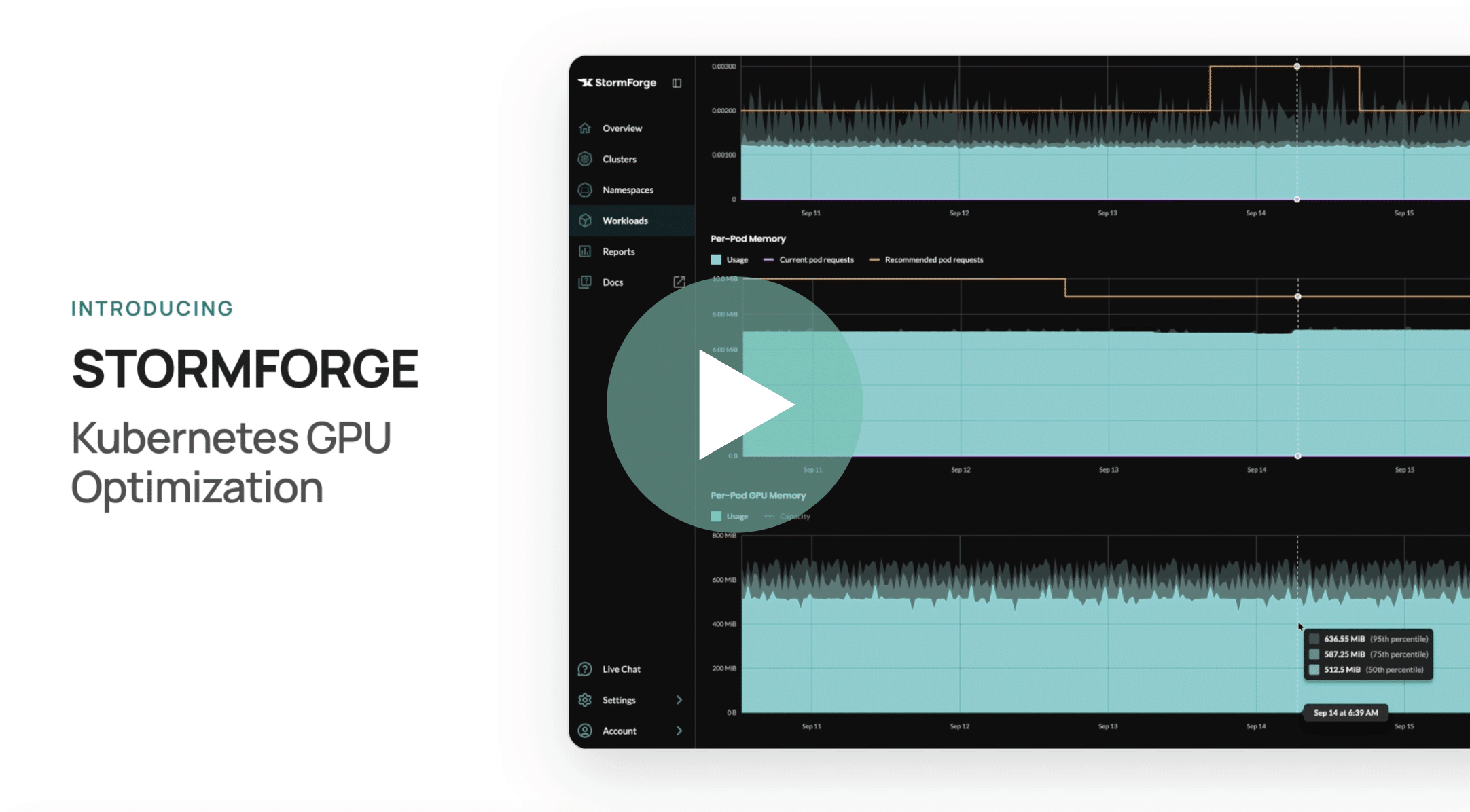
Watch the video from Scott Moore’s Performance Tour, where StormForge CEO, Matt Provo, discussed how AI can be used to predict configuration options – and which will, and will not, deploy successfully – and how StormForge is leading the way.



Related Blogs
The Technical Guide to Kubernetes Rightsizing from LearnKube
The Technical Guide to Kubernetes Rightsizing from LearnKube is a comprehensive, hands-on guide to safely optimizing CPU and memory across…