AI and Performance Engineering: How can AI streamline and accelerate the analysis and configuration phases for Kubernetes apps?

By simplifying deployment and management for container-based workloads, Kubernetes has become a top choice for orchestration in the public cloud, on-premises, and at the edge. But with these benefits come some challenges, primarily around the complexity of analyzing, configuring and optimizing cloud-native workloads. And these challenges aren’t going away, with Gartner estimating that more than 95% of new digital workloads will be deployed on cloud-native platforms by 2025. Kubernetes isn’t just here to stay, it’s going to pressure organizations to adopt solutions that can improve the analysis and configuration phases of Kubernetes applications for better performance and efficiency.
This is where AI comes into play, accelerating load testing and tuning for Kubernetes applications, which, in turn, improves efficiency, service delivery and business agility. At the same time, AI can help lower cloud costs. Applying intelligent automation to Kubernetes application load testing and tuning eliminates the time and resources required to both manually run tests repeatedly, and analyze the small, incremental changes that may–or may not–help optimize performance and resources.
Today, cloud-native development and deployment is all about the need for speed. But with a near-infinite number of resource configuration combinations, humans charged with manually testing and tuning Kubernetes applications can’t possibly work as quickly or as accurately as ML- and AI-based approaches that drive automation. It’s impractical (and ineffective) from both a cost and resource perspective to rely on manual approaches to Kubernetes optimization, no matter how much experience or knowledge an engineer brings to the table. Instead, AI enables engineers to rapidly iterate through countless possibilities and rapidly arrive at results that align with business objectives with little to no compromise on performance or cost.
Although Kubernetes is a modern data center technology, the only option for most organizations today is to accept the shortcomings of each Kubernetes release. They can spend excessive time and resources manually tuning configurations, or simply over-provision resources to obtain the required application performance and reliability. With AI-based Kubernetes optimization, that’s no longer the case.
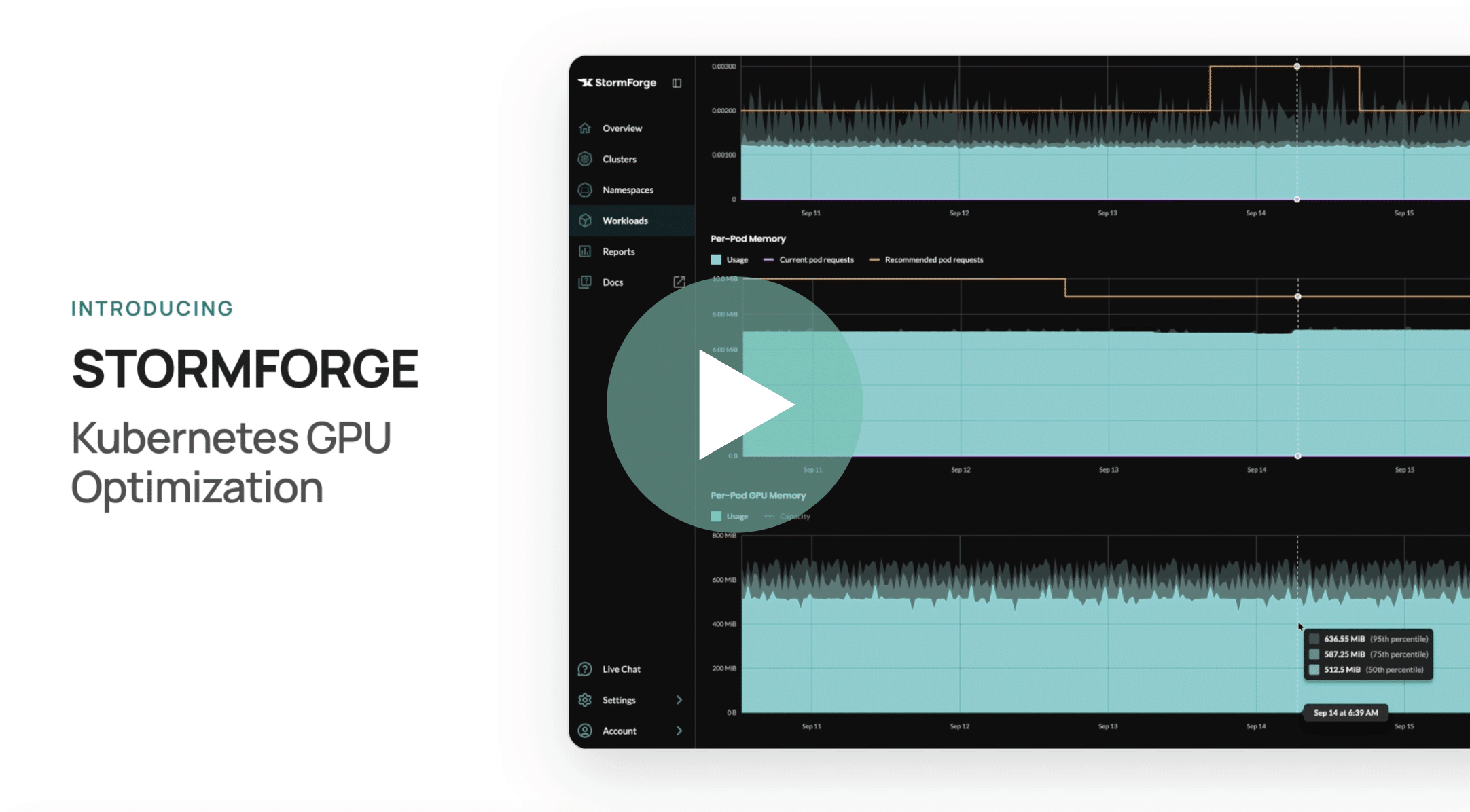
Watch the video from Scott Moore’s Performance Tour, where StormForge CTO, Patrick Bergstrom, discussed how AI is impacting, improving, and accelerating performance engineering–and how StormForge is leading the way.


Related Blogs
The Technical Guide to Kubernetes Rightsizing from LearnKube
The Technical Guide to Kubernetes Rightsizing from LearnKube is a comprehensive, hands-on guide to safely optimizing CPU and memory across…