What Kubernetes Reveals About the Next Phase of Cloud Cost Management
Cloud cost management is maturing.
For years, cloud cost management focused on visibility: getting bills under control, understanding which services drove spend, and giving finance, engineering, and operations a shared view of the numbers. Those capabilities still matter, but the environments they now have to govern are more dynamic, more shared, and more financially consequential than they were even a few years ago.
GigaOm’s latest Cloud FinOps Radar Report reflects that broader progression, describing a market increasingly shaped by financial accountability, AI-driven optimization, and closer coordination across finance, engineering, and operations. That broader evolution is not specific to Kubernetes, but Kubernetes is one of the places where its implications become easiest to see.
In this article
- What the GigaOm report actually evaluates
- Why the report is broader than Kubernetes
- What Kubernetes reveals about the next phase of cloud cost management
- Why CloudBolt’s strengths matter in that context
The category still runs on fundamentals
The report is broad, and its primary criteria are still centered on core cloud cost management capabilities, such as:
- normalized cloud vendor billing
- cloud vendor cost comparisons
- cloud rate optimization
- IT finance integration and chargeback
- identification of cost optimization opportunities
- integrations
- forecasting and variance analysis
- FOCUS format support
Container and serverless support appear as emerging features rather core scoring criteria.
That framing matters because it keeps the report incos perspective. The category is still being judged first on whether vendors can help organizations bring structure to cloud spend: normalize data across providers, compare costs more consistently, connect financial reporting to operational planning, and support a stronger model of accountability. For many organizations, that remains the immediate need. The report says as much.
But once those basics are in place, the question becomes less about what the numbers say and more about how teams respond to them. That is where the analyst outlook is especially useful. Its emphasis is not limited to better reporting. It points toward a more mature operating model shaped by stronger financial governance, more proactive optimization, and more automation across increasingly complex environments.
Kubernetes exposes where reporting gets harder to operationalize
Shared infrastructure makes it harder to translate cost visibility into ownership and action.
Kubernetes does not remove the need for billing accuracy, forecasting, or chargeback. It places those practices in environments where ownership and resource boundaries are less clearly defined.
Clusters are often shared across teams, resources are pooled and abstracted by the scheduler, and workloads shift frequently as capacity scales up or down in response to demand. The same infrastructure may support multiple applications, teams, and business functions at once. Under those conditions, cost visibility can remain technically accurate at the billing layer while still leaving important operational questions unresolved.
Cost visibility can remain technically accurate at the billing layer while still leaving important operational questions unresolved.
Teams may be able to see the spend associated with a cluster or environment but still struggle to determine which workloads drive the highest consumption, how shared platform costs should be allocated, or where optimization efforts should begin.
That ambiguity can weaken showback, complicate chargeback, and make ownership harder to establish in a way that feels credible to the teams involved.
It also makes optimization harder to operationalize. A large share of inefficiency in Kubernetes environments stems from familiar patterns such as padded requests, inherited defaults, conservative limits, or workloads that were tuned once and then left alone as usage around them changed. The issue is often not a lack of reporting, but the difficulty of turning that reporting into repeatable, technically sound, and safe actions for production workloads.
This is what makes Kubernetes a useful lens for reading the report. It reveals where the broader market shift—from visibility to accountability, from reporting to optimization—gets harder in practice.
Why CloudBolt’s Kubernetes strengths stand out in that context
This is where CloudBolt’s placement in the report gets interesting.
The report is broad, but within that evaluation, GigaOm specifically highlights CloudBolt’s bill-accurate Kubernetes cost allocation, granular chargeback, and showback across clusters and namespaces, and integrated StormForge machine learning for continuous rightsizing and performance tuning. It also positions CloudBolt as a Leader and Outperformer in the Innovation/Platform Play quadrant.
Of particular note is that the report is recognizing more than visibility alone. It points to a combination of cost allocation in shared Kubernetes environments and continuous optimization tied to those insights. Taken together, those capabilities point to a more operational model of cost management, one that links financial understanding with concrete decisions about workload behavior and resource efficiency.
That does not make Kubernetes the center of the category. It does make Kubernetes one of the clearest places to see where the category becomes more demanding in practice–and where it is rapidly heading.
Cloud cost management is becoming more accountable and more operational
The most useful takeaway from the report is not that dashboards matter less. It is that visibility is increasingly expected to support more than itself: governance, automation, predictive analysis, and a broader expectation that teams will act on what the data shows.
That shift spans multicloud, hybrid cloud, SaaS, and AI infrastructure. Kubernetes is only one part of that picture, but it remains one of the cleanest environments in which to see what the next phase demands. Shared infrastructure blurs ownership, billing data alone does not fully explain workload behavior, and optimization decisions carry performance implications.
Kubernetes does not redefine cloud cost management so much as make its next set of requirements harder to ignore. It forces a more essential interdependence between financial visibility, infrastructure behavior, operational decision-making, and AI/ML-driven automation.
That is what Kubernetes reveals about the next phase of cloud cost management.
See how much you’re overpaying for Kubernetes
Benchmark your cluster utilization against real-world data and find out where you’re leaving money on the table.
Run the free calculator


Related Blogs
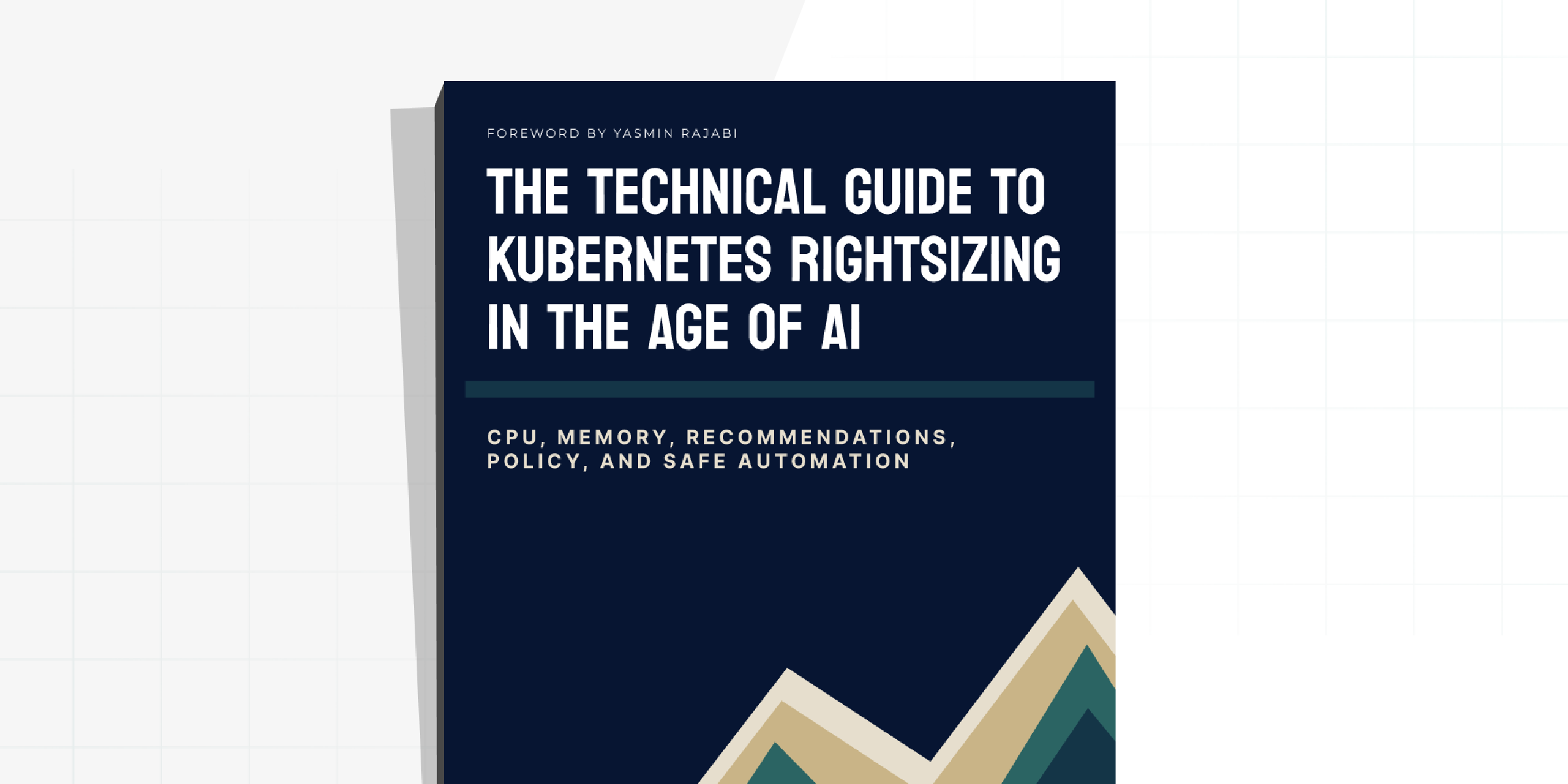
The Technical Guide to Kubernetes Rightsizing from LearnKube
The Technical Guide to Kubernetes Rightsizing from LearnKube is a comprehensive, hands-on guide to safely optimizing CPU and memory across…