StormForge vs ScaleOps: A Technical Comparison of Kubernetes Rightsizing Approaches
StormForge and ScaleOps both automate Kubernetes resource optimization, but they take meaningfully different approaches to how much control you hand over and when. This page walks through the differences in architecture, automation model, and trade-offs, so you can evaluate which fits your environment.
Feature comparison
| StormForge | ScaleOps | |
| Deployment model | SaaS. Three self-optimizing pods in-cluster (Agent workload controller, Agent metrics forwarder, Applier). All processing happens in the cloud. | Self-hosted. Requires in-cluster Prometheus for metrics collection and storage. |
| Infrastructure requirements | Three lightweight, self-optimizing pods. No separate metrics stack required. Additional pods scale with clusters count. | Full Prometheus deployment per cluster. Additional infrastructure scales with workload count. |
| HPA optimization | Patented bi-dimensional autoscaling: adjusts requests and HPA target utilization as a coupled pair. Continuous drift reconciliation restores optimized values after CI/CD deploys or manual changes. | HPA-aware optimization changes target utilization to value for recommendations. Other details not publicly documented. |
| In-place pod resizing | Supported with automatic rollback if application health degrades. Explicit fallback handling when IPPR is unavailable. | Supported. |
| OOM protection | Yes. Prevents OOM kills by adjusting memory recommendations based on observed usage patterns. Detects OOM kills reactively and applies automatic healing. | Yes. Detects OOM kills reactively, and applies automatic healing. |
| ML approach | Patented per-workload ML models trained on 28+ days of usage data. Captures weekly and daily seasonality patterns. | Optimization based on most recent data with workload behavior detection and burst reaction. |
| Configuration model | Policy-based: cascading rules by namespace, label, or workload type. Org-wide defaults with team-level overrides. Deterministic evaluation order. Zero-config by default. | Per-workload policies with automatic workload type detection. Zero-config by default. |
| Drift prevention | Continuous requests + HPA reconciliation when using Applier. Mutating admission webhook for GitOps-aware patching. Detects and restores optimized values after deploys. | GitOps integration with Argo CD, Flux, and CI/CD pipelines. Platform actions defined and managed as code. |
| Automation approach | Progressive autonomy: observe, recommend, then automate. Teams control the pace. | Fully autonomous by default. |
| GPU optimization | On the roadmap. Not yet available. | Available via MIG integration. |
| Cost allocation | Accurate billing data inclusive of discounts and savings plans. Network costs, exportable cost data, and container level accuracy. | Built-in cost monitoring per cluster, namespace, team, label, and annotation. |
| Java/JVM support | Detects and rightsizes Java heap alongside container resources for safe memory rightsizing. | Java resource management available. Optimizes JVM memory patterns. |
| Karpenter integration | Complements Karpenter bin-packing through pod rightsizing. Up to 70% node efficiency vs ~20% with Karpenter alone. | Karpenter optimization including disruption budget management, instance selection, and node consolidation. |
| Node optimization | Recommends optimal node shapes with configurable node affinity. Works with Karpenter/CAS for provisioning. | Direct node management: context-aware node provisioning, consolidation, spot optimization, and smart pod placement. |
| Spot optimization | Not offered | Spot optimization support |
| Pricing | Per vCPU, billed annually. Volume discounts. Pay-as-you-go on AWS Marketplace. 30-day free trial. | Custom quote only. No public pricing. 7-day trial. |
| Founded | 2019 (as GramLabs). Acquired by CloudBolt 2025. | 2022. |
| Named customers | Acquia, US Bank, Equifax, PicPay, Trumid, Pega, Custom Ink | Adobe, Wiz, DocuSign, Salesforce, Coupa, Freddie Mac, Chewy |
Why the architecture matters
The biggest architectural difference between StormForge and ScaleOps lies in where metrics processing occurs.
ScaleOps is primarily self-hosted. It deploys into your cluster and requires a Prometheus stack for metrics collection and storage. This gives you full data locality, which matters for air-gapped or highly regulated environments. The tradeoff is infrastructure overhead. At scale, that Prometheus deployment becomes a meaningful cost and operational burden. At 25,000 workloads, the Prometheus infrastructure alone can cost over $100K annually in compute, memory, and storage.
StormForge is SaaS-based. The in-cluster footprint consists of three self-optimizing pods: an agent workload controller, a lightweight Prometheus pod that handles only scraping, and an applier that manages automated deployments. All metrics storage and ML processing happen in the StormForge cloud. No Prometheus stack to maintain, scale, or pay for. The tradeoff is that workload metrics leave your cluster. No code, configuration, or application data is transmitted. Only resource usage metrics.
How they handle HPA-managed workloads
This is where the products diverge most. For workloads using the Horizontal Pod Autoscaler, changing resource requests also changes scaling behavior. HPA decisions depend on utilization ratios, so when requests drop, utilization appears to spike, causing the HPA to scale out more aggressively.
StormForge addresses this with patented bi-dimensional autoscaling. When it adjusts requests, it simultaneously recalculates HPA target utilization to preserve the workload’s existing scaling behavior. The Applier also continuously monitors for drift: if a CI/CD deployment or manual change resets the HPA target, StormForge detects it and automatically reconciles. For GitOps workflows, a mutating admission webhook patches pods at admission time, ensuring optimized values are applied regardless of what’s in the manifest.
ScaleOps takes a different approach. Its automation is context-aware and automatically detects workload types, applying appropriate policies without manual configuration. Their platform describes HPA-aware optimization by changing utilization to Target Value and is less publicly documented than StormForge’s coupled-pair approach.
See how much you’re overpaying for Kubernetes
Benchmark your cluster utilization against real-world data and find out where you’re leaving money on the table.
Run the free calculatorAutomation philosophy
ScaleOps is built for full autonomy from day one. Install via Helm, and it begins optimizing automatically with no oversight required. This is appealing for teams that want immediate results and trust the system to make safe decisions.
StormForge takes a progressive autonomy approach. Teams start with the Agent in observe-and-recommend mode, review recommendations to build confidence, and enable the Applier for automated deployment when ready. This maps to how most enterprise teams actually build trust: incrementally, not all at once.
Where ScaleOps has an edge
ScaleOps has a broader platform scope. Beyond pod rightsizing, it offers direct node provisioning and consolidation, spot instance management, GPU optimization via MIG integration, and an AI SRE agent. If your priority is a single platform that handles pod rightsizing, node management, and GPU allocation from a single control plane, ScaleOps offers greater surface area.
That breadth comes with tradeoffs. A broader scope means more infrastructure to run, more configuration surface to manage, and more system behavior to trust before you’re comfortable letting it operate autonomously. For teams that are still building confidence in automated rightsizing, adding node management and spot decisions to the automation surface can expand risk faster than it reduces cost. Whether that tradeoff is worth it depends on your team’s maturity, your cluster scale, and how much operational complexity you can absorb.
Where StormForge has an edge
StormForge’s SaaS architecture means a light cluster footprint with no separate Prometheus stack required. At scale, that infrastructure difference adds up in both cost and maintenance overhead. Its patented ML approach builds a per-workload model for each workload it manages, rather than a generalized model applied across workloads. Each model is trained on 28+ days of usage data, capturing daily and weekly seasonality patterns specific to that workload. The practical difference is in recommendation accuracy: rightsizing based on how your workload actually behaves over time, rather than on recent averages or generalized heuristics. Pricing is transparent: per vCPU, published tiers, 30-day free trial, and AWS Marketplace pay-as-you-go, compared to ScaleOps’s custom-quote model with a 7-day trial.
The deeper technical edge is in HPA-managed workloads. StormForge’s patented bi-dimensional autoscaling adjusts resource requests and HPA target utilization as a coupled pair, preserving existing scaling behavior when requests change. Most tools don’t do this, which means HPA-managed workloads receive recommendations that inadvertently disrupt scaling rather than improve it. Continuous drift reconciliation restores optimized values after CI/CD deploys or manual changes. StormForge also detects and prevents OOM kills by adjusting memory recommendations based on observed usage patterns before a workload fails.
Which one is right for you?
Choose ScaleOps if: you need GPU optimization today; you require an air-gapped or fully on-prem deployment; you want a broader platform covering nodes, spot, and pod placement; or you prefer a fully autonomous approach from install.
Choose StormForge if: you want to avoid running Prometheus infrastructure; your HPA-managed workloads are your biggest optimization gap; you need transparent pricing and a longer trial; you prefer a progressive autonomy model where teams control the pace; or you’re already using Karpenter and want to compound pod and node savings.
See how it handles your workloads
Start free trial
FAQs
Does StormForge require Prometheus?
StormForge deploys a lightweight Prometheus pod for metrics scraping only. It does not require a full Prometheus stack. All metrics storage and ML processing occur in the StormForge cloud, so there’s no separate Prometheus deployment to maintain or scale.
How does StormForge handle HPA-managed workloads differently from ScaleOps?
StormForge uses patented bi-dimensional autoscaling that adjusts resource requests and HPA target utilization as a coupled pair. This preserves existing scaling behavior when requests change. It also continuously monitors for drift and reconciles optimized values after CI/CD deploys or manual changes. ScaleOps offers HPA-aware optimization, but its approach is less well-documented publicly.
Which tool is better for teams that aren’t ready to fully automate production?
StormForge is designed for this. It runs in observe-and-recommend mode by default, letting teams review recommendations before enabling automated deployment. ScaleOps is fully autonomous from install, which works well for teams comfortable delegating decisions to the system immediately.
Does ScaleOps offer GPU optimization?
Yes. ScaleOps offers GPU optimization via MIG integration. StormForge does not currently offer GPU optimization; it is on the roadmap.
How does StormForge pricing compare to ScaleOps?
StormForge pricing is per vCPU, billed annually, with volume discounts, a 30-day free trial, and pay-as-you-go availability on AWS Marketplace. ScaleOps uses a custom quote model with no public pricing and a 7-day trial.


Related Blogs
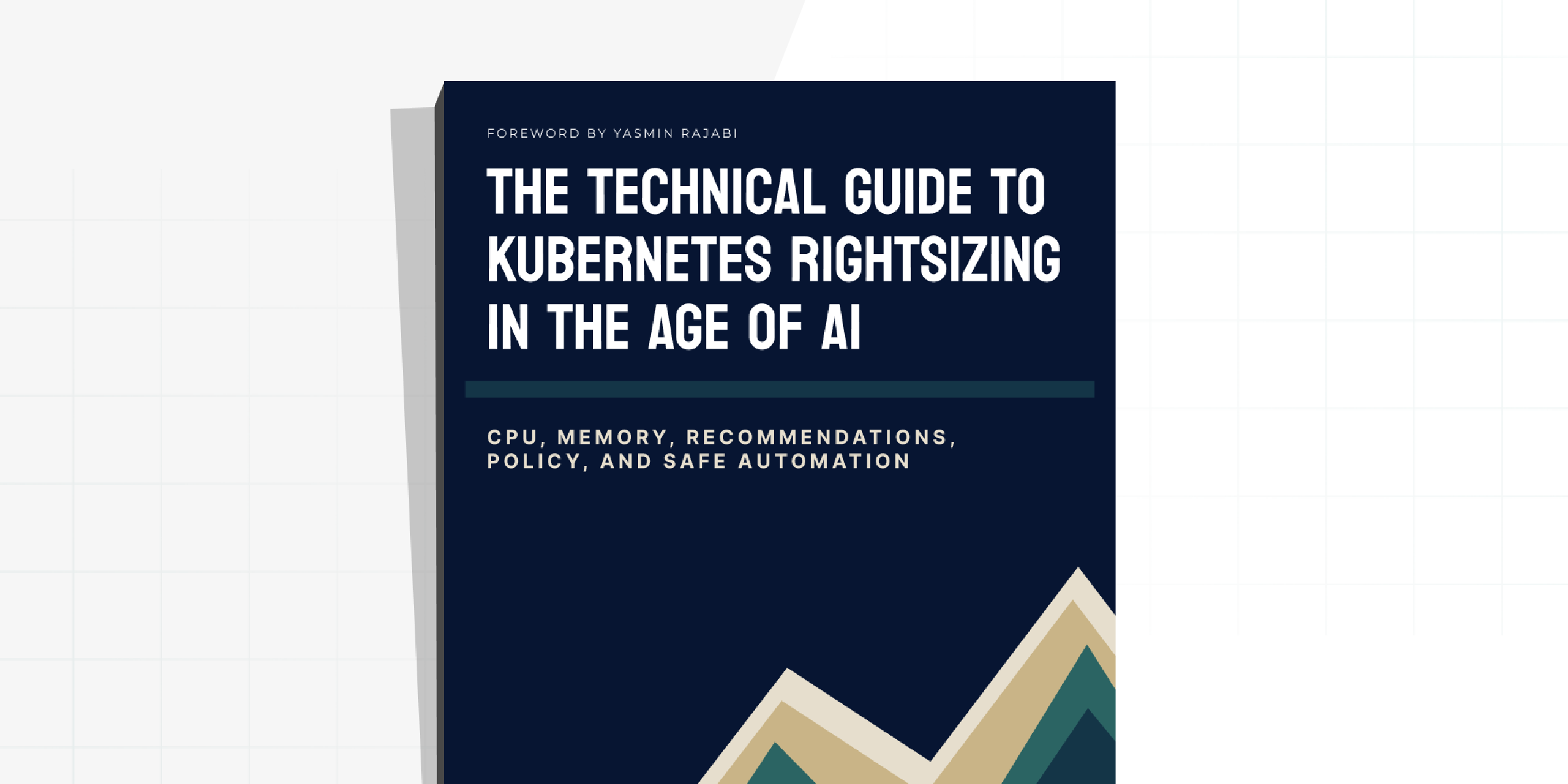
The Technical Guide to Kubernetes Rightsizing from LearnKube
The Technical Guide to Kubernetes Rightsizing from LearnKube is a comprehensive, hands-on guide to safely optimizing CPU and memory across…