


Karpenter + StormForge




Complete Kubernetes optimization

Up to 80% reduction in Kubernetes cloud costs

Cluster, vertical, and horizontal autoscaling covered

0 manual resource tuning required
KARPENTER + STORMFORGE
Two layers of automation,
working together
Kubernetes has three autoscaling dimensions: cluster, vertical pod, and horizontal pod. Native tools exist for each, but getting all three working together accurately at scale is where most teams struggle. Karpenter and StormForge each solve a distinct layer, and compound each other’s impact when combined.
Karpenter handles the cluster
- Optimal node provisioning — analyzes pending pod resource requests and provisions the lowest-cost instance type to run them
- Automatic consolidation — reschedules workloads onto fewer, more cost-efficient nodes as utilization changes
- Works anywhere — compatible with any Kubernetes environment, including cloud and on-premises distributions
- CNCF-backed — open-source, donated to the CNCF in 2023; battle-tested in production at scale
StormForge handles the pods
- ML-driven rightsizing — continuously analyzes real CPU and memory usage to set accurate resource requests
- HPA synchronization — coordinates vertical pod sizing with HPA target utilization, so scaling stays consistent as pod sizes change
- Automatic application — recommendations apply continuously without manual intervention
Machine learning that keeps pods continuously rightsized
StormForge runs a closed-loop ML process on every workload. No manual tuning. No stale configs.
- Fewer wasted resources per pod – directly translates to fewer nodes needed
- Horizontal and vertical scaling work together, not against each other
- No more developer vs. platform engineer debates over resource values
- Works out of the box – no changes to your existing Kubernetes setup


“With Karpenter and StormForge, it’s less of a balancing act between cost and availability — you get the best of both worlds where you can stay online, stay available, without worrying about over-provisioned resources eating up your AWS bill.”
— Matthew Lenhard, Co-founder & CTO, Positional
Compounding efficiency across every layer
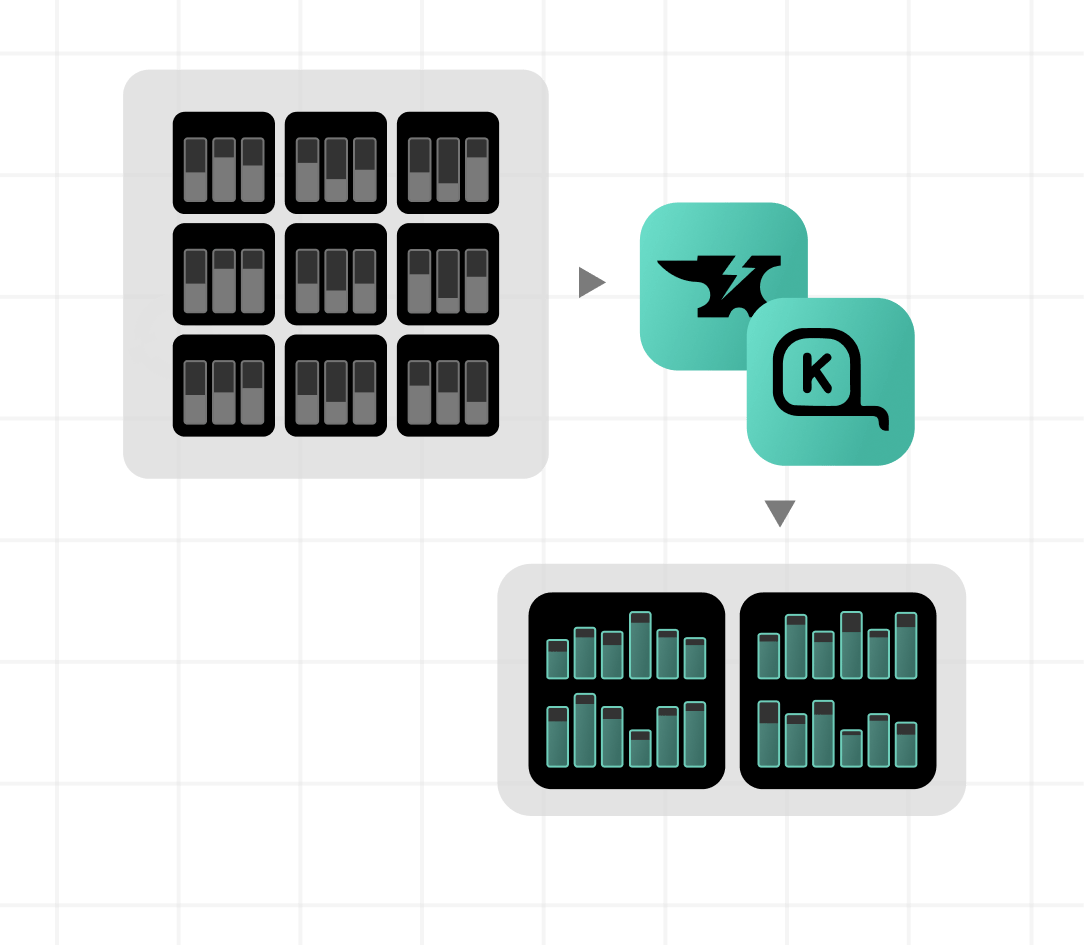
Karpenter packs workloads onto optimal nodes. StormForge ensures those workloads are correctly sized before they arrive. Each layer multiplies the other’s impact — rightsized pods mean better bin packing, which means fewer nodes needed, which means lower costs across the board.
- Platform engineers – eliminate resource management toil at scale
- FinOps teams – get continuous, automatic cost optimization with audit trails
- Engineering leaders – reduce cloud spend without slowing down development
Your cluster, fully optimized
Try for free on AWS Marketplace

Ready to learn more?

How Acquia cut web node infrastructure by 65% with continuous Kubernetes rightsizing
Acquia modernized a platform that previously ran on roughly 26,000 EC2 nodes by moving to Kubernetes. The goal wasn’t just containerization—it was elastic scaling for traffic spikes without relying on fixed “small/medium/large” sizing. Results at a glance 65% reduction in web node footprint 99.99% availability delivered consistently 26,000 EC2 nodes as the legacy baseline modernized […]
Automating Kubernetes rightsizing and container-level cost allocation
Platform teams have spent years squeezing more efficiency out of Kubernetes. The real pressure hits when your AWS bill rises and nobody can confidently map spend back to workloads, teams, or tenants. In this session, AWS and CloudBolt walk through a practical “better together” approach: EKS Auto Mode reduces day-to-day cluster overhead (compute, patching, upgrades), […]
Bill-Accurate Kubernetes Cost Allocation, Now Built Into CloudBolt
CloudBolt now brings granular Kubernetes cost allocation directly into the platform. It delivers bill-level accuracy down to the container, intelligently allocates shared costs, and integrates natively with enterprise chargeback. If you’d rather see it than read about it, start with a quick walkthrough of the experience: Here’s what that looks like inside CloudBolt when you […]
FAQs
-
What is Karpenter and how does it differ from the Kubernetes Cluster Autoscaler?
Karpenter is an open-source Kubernetes cluster autoscaler built by AWS and donated to the CNCF in 2023. Unlike the native Cluster Autoscaler, which works with predefined node groups, Karpenter provisions nodes directly based on the resource requests of unschedulable pods, selecting the lowest-cost instance type that meets the workload’s requirements. It also continuously looks for consolidation opportunities, rescheduling workloads onto fewer, more cost-efficient nodes as utilization changes. Organizations that have switched from Cluster Autoscaler to Karpenter typically see significant reductions in infrastructure costs.
-
Does Karpenter rightsize pod CPU and memory requests?
No. Karpenter operates at the node and cluster level, it provisions and consolidates nodes based on the resource requests pods declare. It does not analyze or adjust those requests. If pods are overprovisioned, Karpenter will provision larger nodes than necessary to accommodate them. StormForge addresses this gap by continuously rightsizing pod resource requests using ML, so that Karpenter’s bin packing works on accurately sized pods rather than inflated ones.
-
How do Karpenter and StormForge work together?
Karpenter and StormForge operate at complementary layers. Karpenter provisions the right nodes for the workloads it sees; StormForge ensures those workloads are requesting only what they actually need. When pods are rightsized by StormForge, Karpenter can pack them onto fewer, smaller nodes, delivering compounding cost savings that neither tool achieves independently. The combination effectively addresses all three Kubernetes autoscaling dimensions: cluster scaling via Karpenter, and vertical and horizontal pod scaling via StormForge.
-
What is the difference between VPA, HPA, and StormForge?
The VPA adjusts pod CPU and memory requests based on historical usage but requires pod restarts and conflicts with HPA when both are active. The HPA scales pod replica counts in response to utilization thresholds but doesn’t adjust individual pod resource requests. StormForge uses ML to rightsize pod requests more accurately than VPA, and actively coordinates with HPA by adjusting its target utilization thresholds as pod sizes change, preventing the thrashing and instability that occurs when VPA and HPA are used independently.
-
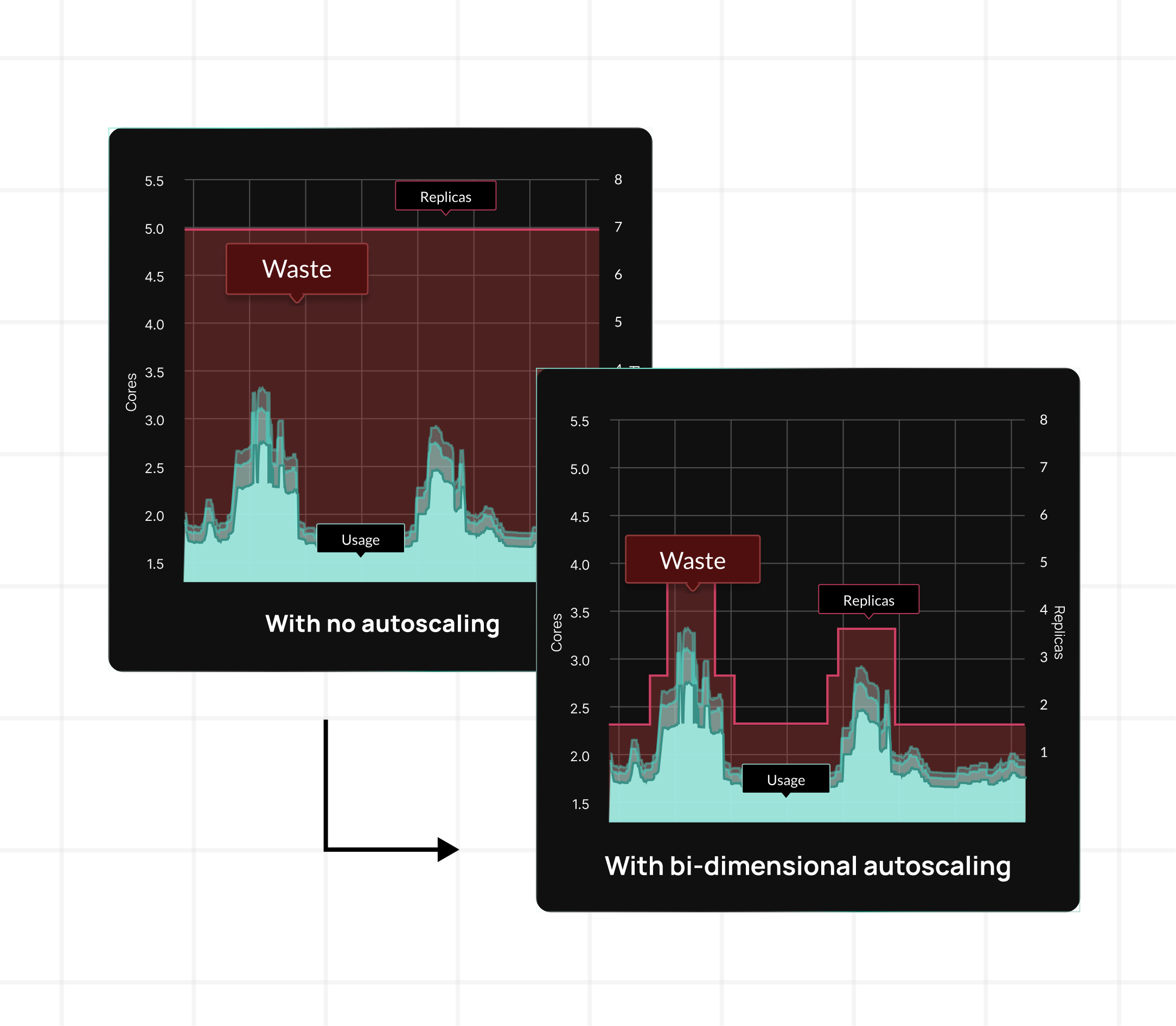
What is bi-dimensional autoscaling?
Bi-dimensional autoscaling is StormForge’s approach to coordinating vertical and horizontal pod scaling simultaneously. When pod resource requests change vertically, the HPA’s behavior can become unpredictable if its target utilization thresholds aren’t updated to match. StormForge manages both settings together, adjusting pod CPU and memory requests and the corresponding HPA target utilization, so vertical and horizontal scaling work in sync rather than against each other.
-
How quickly can I see results with Karpenter and StormForge?
Karpenter begins provisioning optimized nodes immediately upon deployment. StormForge starts collecting workload usage data right away and can surface initial rightsizing recommendations within minutes of installation. A free 60-minute Karpenter best practices analysis is available on AWS Marketplace for teams that want an expert-led assessment of how to best configure Karpenter for their environment before enabling full automation.