Ask the Experts: Navigating the Hypervisor Shakeup
Enterprise infrastructure strategy is being shaped by two forces at once: accelerated public-cloud investment and AI-driven capacity demand, paired with a rising push to bring select workloads closer to controlled environments for sovereignty, latency, and risk reasons. Gartner forecasts worldwide public-cloud end-user spending will reach $723.4B in 2025. At the same time, Barclays survey findings have been widely cited as showing a large share of CIOs intend to repatriate at least some workloads to private cloud or on-prem environments.
In this recorded panel, guest presenter Tracy Woo, Principal Analyst at Forrester Research, shares what she is seeing across the market, while CloudBolt leaders and Nubera co-founder Ghufran Shah compare notes on how teams are responding to the hypervisor shakeup—from cost pressure to migration reality to the operating models that hold up during coexistence.
What you will hear in this discussion
- Why hybrid is becoming the default operating reality for most enterprises, not a transitional phase
- What is driving renewed interest in repatriation and private-cloud investment, without a mass reversal
- What CloudBolt research indicates about footprint reduction and why full exits remain rare (even when intent is high)
- Why migration complexity is often operational, not technical, including dependency mapping, process coupling, and coexistence planning
- The pragmatic view on modernization: where containers fit, and why many workloads remain VMs for the foreseeable future
- What high-functioning hybrid organizations do differently: unified visibility, workload placement policy, and cost transparency
Key themes from the panel
The hypervisor conversation now looks like early public cloud conversations
The panel frames today’s moment as a reset of familiar questions, under new constraints: what to keep on-prem, what to move to public cloud, what to decommission, and what to re-platform. The differentiator is that these choices now carry sharper implications for cost predictability, governance overhead, and operational continuity.
Repatriation and cloud growth are both real
Tracy’s view is consistent with broader market research: cloud remains foundational, but organizations are becoming more selective about where workloads run and why. Repatriation is not a mass exit; it is a targeted response to performance, sovereignty, compliance, and AI-driven cost dynamics.
Coexistence is the hard part
A recurring point from the panelists: the hard part is not choosing a destination. It is running dual environments for long periods while keeping support processes, ITSM workflows, backup and monitoring dependencies, and day-2 operations intact.
Optionality is an operating model, not a slogan
The panel closes on practical guidance: optionality has a real cost, but lack of optionality becomes a control problem. Teams doing hybrid well invest in a unified management plane, reusable automation, and clear workload placement rules. Teams that struggle end up with disconnected islands, duplicated tooling, and slow incident response.
Not sure where to start? Explore your options.
Get ahead of the squeeze



Related Blogs
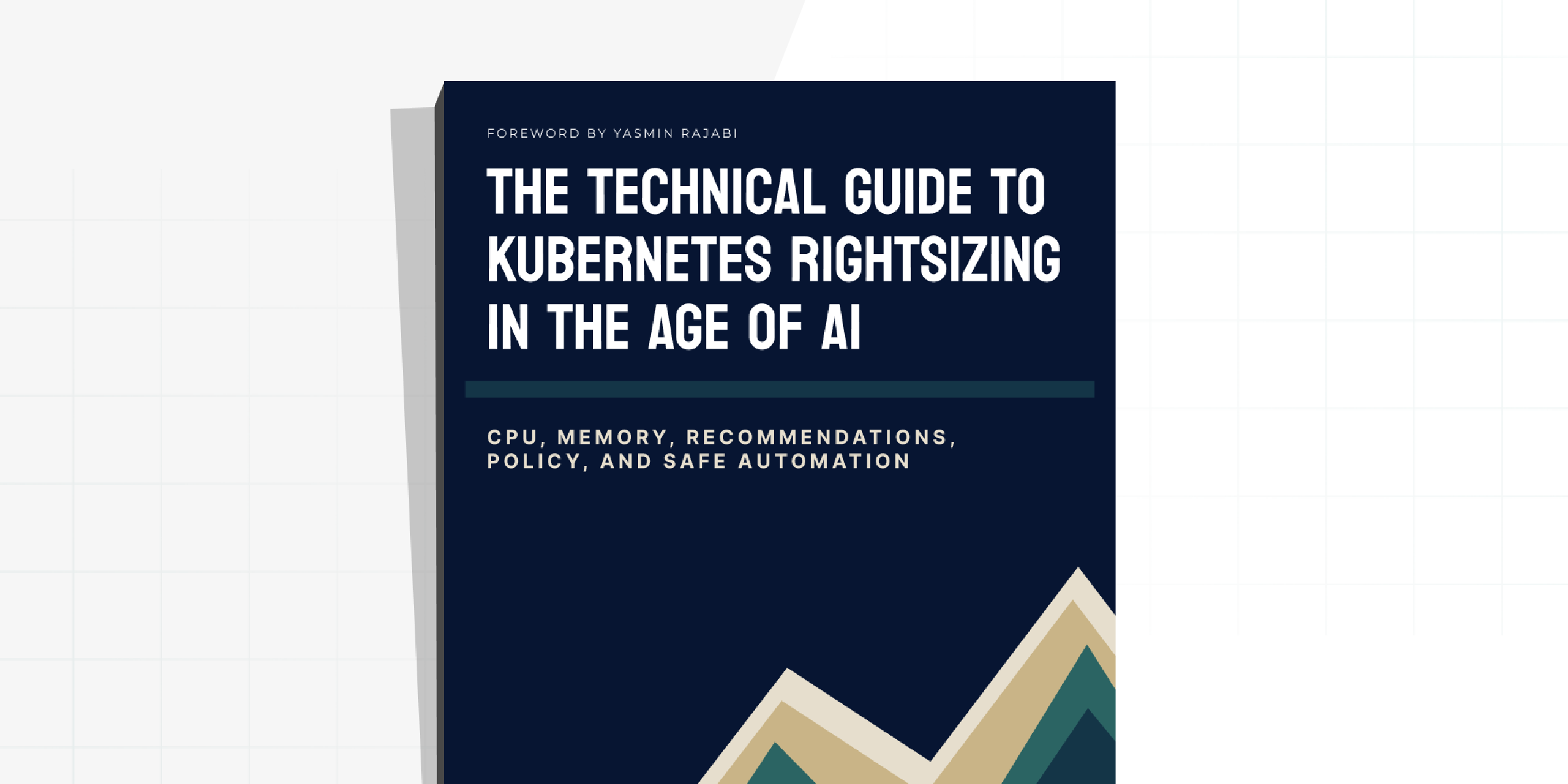
The Technical Guide to Kubernetes Rightsizing from LearnKube
The Technical Guide to Kubernetes Rightsizing from LearnKube is a comprehensive, hands-on guide to safely optimizing CPU and memory across…