From Aria to agility: Modern hybrid cloud automation
If your automation strategy has been anchored in VMware Aria (vRA), the last two years have introduced real operational uncertainty. Licensing changes, partner shifts, roadmap uncertainty, and upgrade pressure have increased both the effort and risk of maintaining existing automation while building for hybrid and multi-cloud.
In this session, F3 Technology Partners and CloudBolt break down what modern hybrid automation looks like in practice: reducing tool sprawl, preserving governance, and standardizing delivery across VMware and the major clouds without forcing a disruptive rip-and-replace.
You’ll also hear what CloudBolt learned from re-running its VMware/Broadcom impact survey in 2026 and how those signals connect to the real blockers teams hit when they try to modernize automation.
Pressure-test your next move
Book 20 minutes

Key takeaways
- Most enterprises are not “fully exiting” VMware; they’re reducing dependence and building optionality workflow by workflow.
- The biggest automation blockers are rarely a lack of tools — they’re governance drag, ownership gaps, brittle logic, and inconsistent patterns across teams.
- A CMP layer can standardize self-service with guardrails across VMware and other platforms while still integrating existing tools like ServiceNow, Terraform, and Ansible.
- Low-risk progress comes from picking one workflow, defining success criteria, and proving value fast (30–60 days), not running a six-month tool evaluation.
What you’ll learn
- What the 2026 VMware/Broadcom survey signals suggest about disruption, strategy churn, and real-world migration pace
- The most common automation goals teams share and the blockers that repeatedly prevent progress
- How a CMP approach reduces fragmentation while preserving approvals, CMDB hygiene, and auditability
- How to pick a low-risk starting point (the workflow selection criteria that keeps pilots practical)
- A concrete example: redesigning a capacity planning workflow into a governed self-service pattern
Jump to
- 03:45 – Welcome + what this webinar covers
- 04:40 – F3 introduction and how they work with automation teams
- 07:05 – Jack’s background + why this topic is personal right now
- 09:13 – Shawn introduction + why CloudBolt re-ran the impact survey
- 14:13 – 2026 survey highlights (disruption, exit rate, strategy churn, workload destinations)
- 16:28 – Live poll: your biggest automation blocker today
- 19:24 – Automation goals vs blockers (why teams get stuck)
- 24:03 – CMP approach: turning blockers into governed self-service
- 26:35 – Lifecycle management + “anything as a service” patterns
- 28:41 – Integration depth: automating governance vs slowing delivery
- 33:15 – Picking a low-risk starting point (how to choose the right pilot)
- 36:10 – Aria vs CloudBolt: support, extensibility, upgrade pain, architecture
- 45:59 – Workflow example: modernizing capacity planning with governed automation
- 52:30 – Q&A + what’s next (VMware Therapy Thursdays)
- 55:05 – AI integrations: MCP approach and how CloudBolt is thinking about it
- 58:16 – Wrap-up + where to get the report/recording
Q&A highlights
A few of the questions and themes that came up (with the practical takeaway):
- How are teams building optionality without ripping everything out?
Start by isolating one workflow that breaks when platforms change (or one workflow with mandatory governance). Redesign it to be platform-agnostic, then expand. - What’s the fastest way to reduce approval drag without losing control?
Automate governance where possible: integrate approvals, CMDB updates, identity, and policy checks into the workflow so speed doesn’t come at the cost of auditability. - How should we think about AI integrations?
CloudBolt’s direction is to stay vendor-agnostic and support execution via an MCP approach, so customers can integrate CloudBolt actions into their broader AI tooling and agent strategies.


Related Blogs
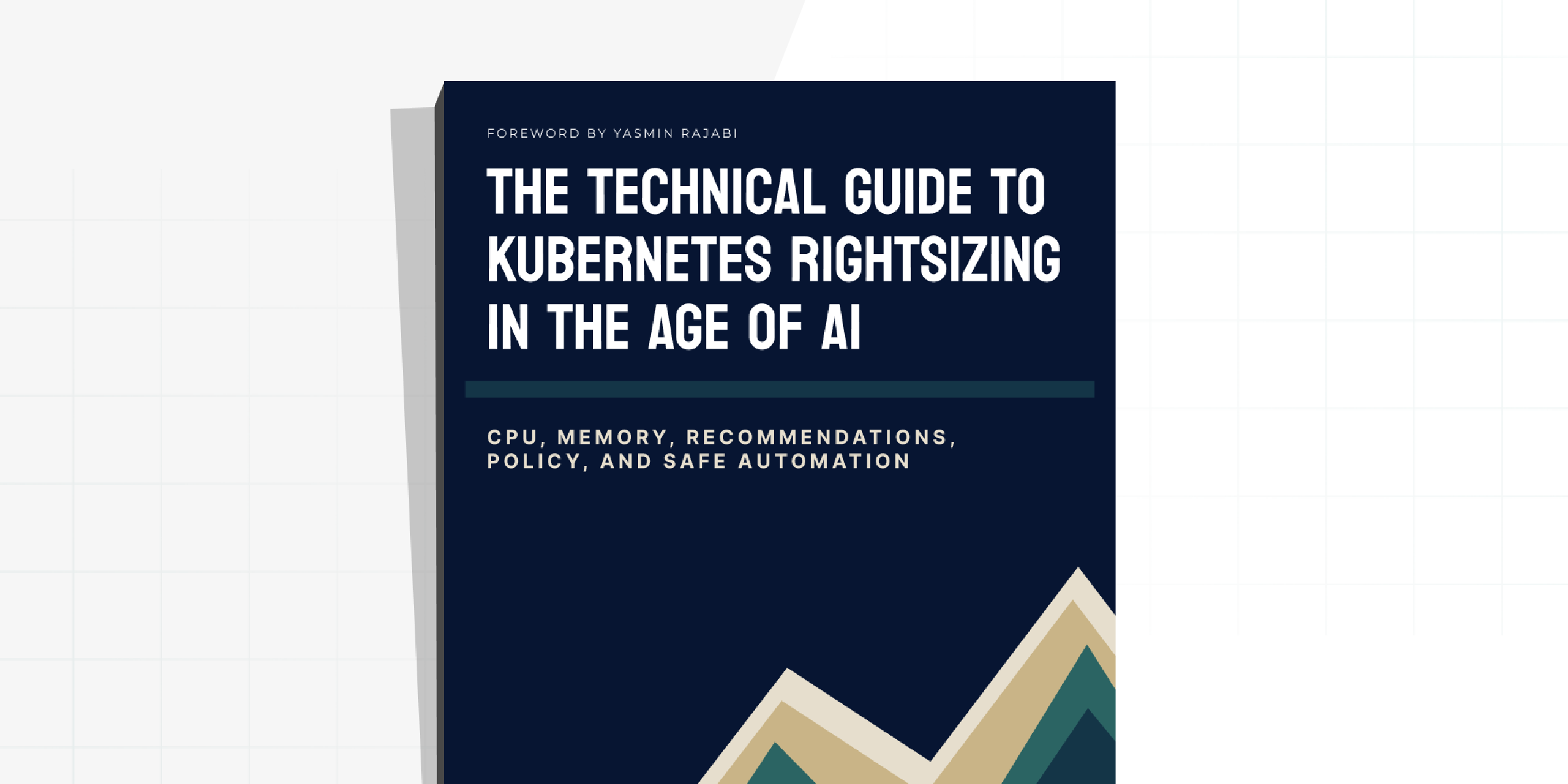
The Technical Guide to Kubernetes Rightsizing from LearnKube
The Technical Guide to Kubernetes Rightsizing from LearnKube is a comprehensive, hands-on guide to safely optimizing CPU and memory across…