Managed Service Providers (MSPs) operating multi-cloud environments face complex billing challenges that traditional accounting software cannot address effectively. MSP cloud billing software automates cost allocation, tracks resource usage across multiple cloud platforms, and provides transparent client billing for services spanning AWS, Azure, Google Cloud, and private infrastructure.
Effective MSP billing goes beyond simple cost aggregation. It requires tag-based cost tracking, real-time usage monitoring, and flexible pricing models that accommodate diverse client needs.
This article covers the must-have features of modern cloud billing software designed for MSPs, explains the functionalities using examples, and provides recommendations for MSPs interested in implementing and adopting cloud billing software.
Summary of key MSP cloud billing software features
| Concept | Description |
|---|---|
| Multi-cloud cost aggregation | Consolidates usage data from AWS, Azure, GCP, and private clouds. Unified cost tracking eliminates manual reconciliation across disparate billing systems. |
| Resource allocation strategies | Supports:
|
| Real-time usage monitoring | Can continuously track resource consumption across all platforms to provide immediate cost visibility and proactive budget management. |
| Flexible pricing models | Accommodates diverse client pricing strategies and maintains profitability, for example:
|
| Integration capabilities | Connects with PSA tools, accounting systems, and cloud management platforms to streamline workflows and eliminate duplicate data entry. |
| Chargeback automation | Enables direct client billing for actual cloud usage. Showback capabilities provide cost transparency without immediate billing impact. |
Stop losing time (and margins) to spreadsheets and manual reconciliation. CloudBolt’s Cloud Billing Platform gives you accuracy, automation, and control at scale—so you can focus on growing your business, not fixing billing errors.
Multi-cloud cost aggregation
Each cloud provider structures billing data differently.
- AWS organizes costs by service and linked account.
- Azure uses subscriptions and resource groups
- GCP relies on projects and SKU-level granularity.
MSPs need API integrations that collect data from each platform and convert data from different formats into a common cost structure.
API integration architecture
Multi-cloud cost aggregation relies on connecting to each provider’s cost management API, each with its own architectural characteristics.
- AWS Cost Explorer API returns detailed line items organized by service and linked account
- Azure Consumption API provides subscription-level data grouped by resource groups
- Google Cloud Billing API exports project-level costs with SKU granularity.
These platforms impose different rate limits that shape polling strategies:
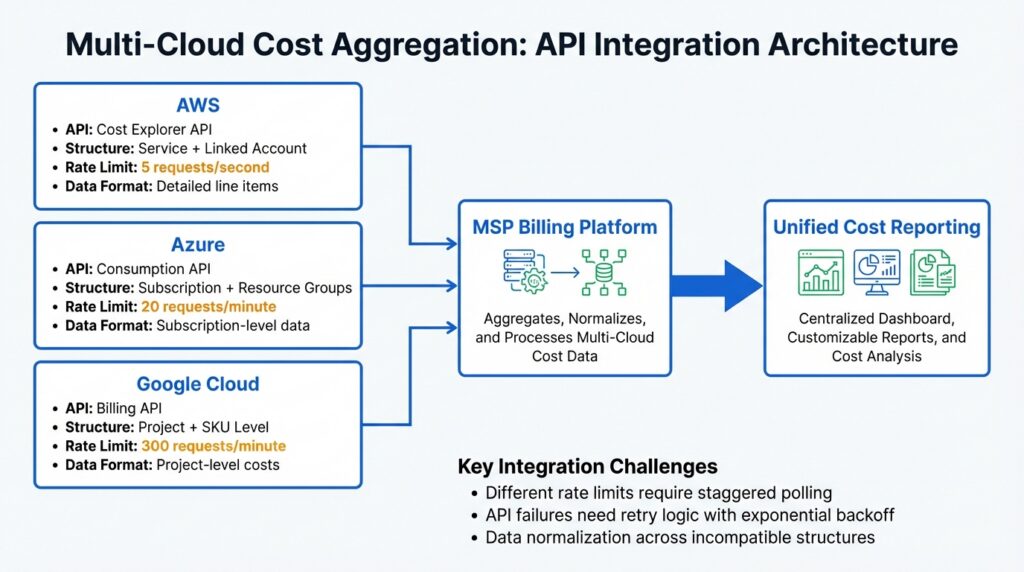
These rate limits allow hourly polling for MSPs with dozens of client accounts, but larger portfolios require staggered schedules or BigQuery-based collection. API failures during provider maintenance windows require retry logic, which uses exponential backoff to prevent data gaps during month-end reconciliation.
Data normalization challenges
Raw data from each provider uses incompatible structures. AWS returns costs by service names like “Amazon Elastic Compute Cloud,” Azure uses meter categories like “Virtual Machines,” and GCP provides SKU descriptions like “N2 Instance Core running in Americas.” CloudBolt’s unified cost reporting aggregates these into standardized categories, treating EC2 instances, Azure VMs, and Compute Engine instances as equivalent “compute” costs.
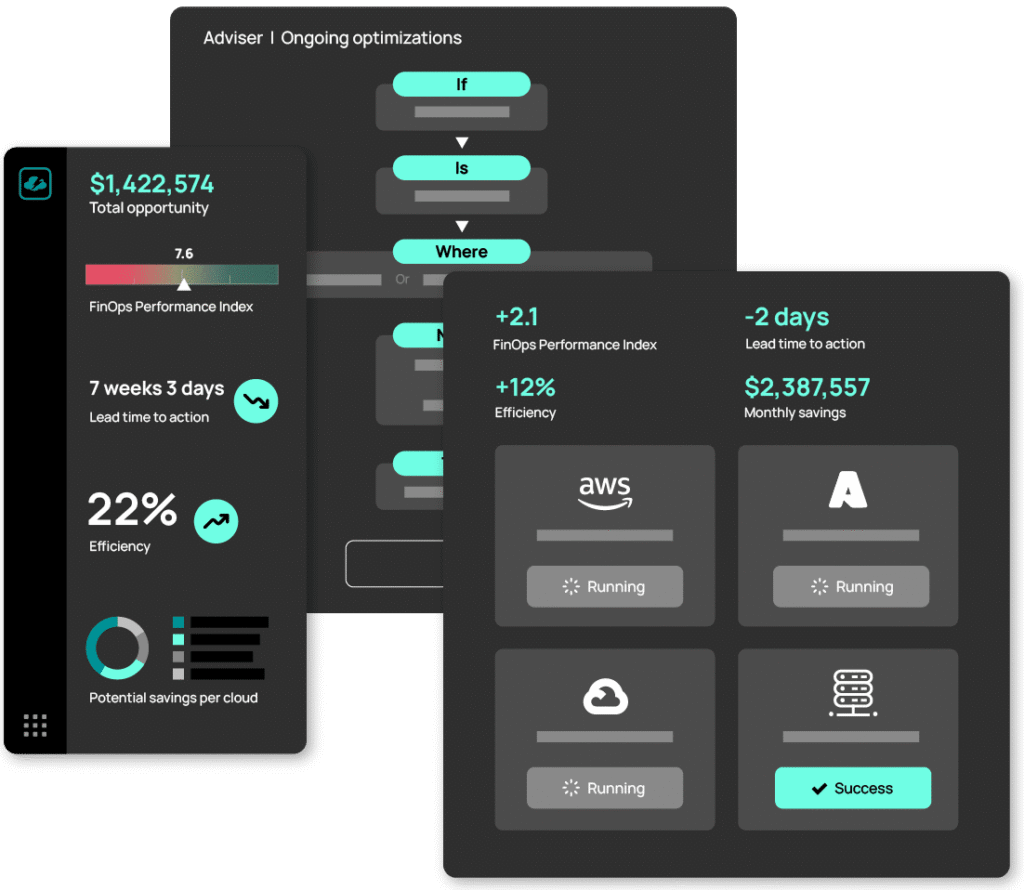
Provider-specific pricing mechanisms further complicate normalization.
- AWS charges separately for instances and EBS volumes
- Azure bundles storage into VM tiers
- GCP applies sustained-use discounts automatically.
Platforms store both raw and normalized data, enabling audit trails and accurate restatements when providers issue billing corrections weeks later.
Regional and currency variations
Resource costs vary significantly by location and currency. For example:
- m5.large in us-east-1 would cost approximately $0.096/hour
- ap-southeast-2 charges $0.134/hour, a 40% difference.
Currency handling impacts margins when provider invoices arrive in USD, but client contracts specify EUR or GBP. Inter-region data transfer often exceeds compute costs themselves, making separate line items essential for optimization discussions.
Reconciliation and hybrid integration
Monthly validation between platform data and provider invoices reveals timing differences, unsynchronized usage credits, commitment discount schedules, and manual adjustments that bypass tracking. Variance analysis flagging 2-3% discrepancies prevents issues from compounding. For hybrid environments, private cloud costs translate into equivalent units like “compute hours” at $0.05/hour. Hardware depreciation, facility overhead, and operational labour are fully allocated, enabling meaningful multi-cloud comparisons.
CloudBolt helps MSPs and distributors automate billing from end to end, eliminating manual reconciliation and unlocking margin protection at scale.
Explore Reselling & Distribution Capabilities to see how.
Hierarchical resource allocation
Shared infrastructure creates the biggest challenge in allocation: when the same resources serve multiple clients, when development environments are shared by multiple teams, or when operational tools generate costs shared by all users. MSPs must calculate these allocations accurately to maintain their per-client target margins.
Shared resource distribution
Infrastructure serving multiple clients requires proportional allocation based on usage. Load balancers split costs by request volume per client. Shared databases are charged by storage or query time; Kubernetes clusters charge for pod costs based on CPU and memory reservations. However, actual consumption may differ significantly from those reservations, creating allocation debates.
Allocation rules update dynamically as patterns shift. For example, a shared caching layer that initially distributes costs evenly across three clients needs an automatic adjustment when one client’s traffic doubles. Static rules unchanged for months gradually diverge from actual usage, creating billing inaccuracies that clients challenge.
Tag-based tracking mechanics
Cost allocation relies on consistent metadata attached to every resource. All three major platforms allow untagged resources by default, requiring active enforcement. AWS uses IAM policies and tag policies for compliance, Azure supports subscription-level tag inheritance, and GCP organization policies enforce labelling across projects. CloudBolt’s cost allocation supports hierarchical structures in which parent clients contain multiple child projects with distinct billing relationships.
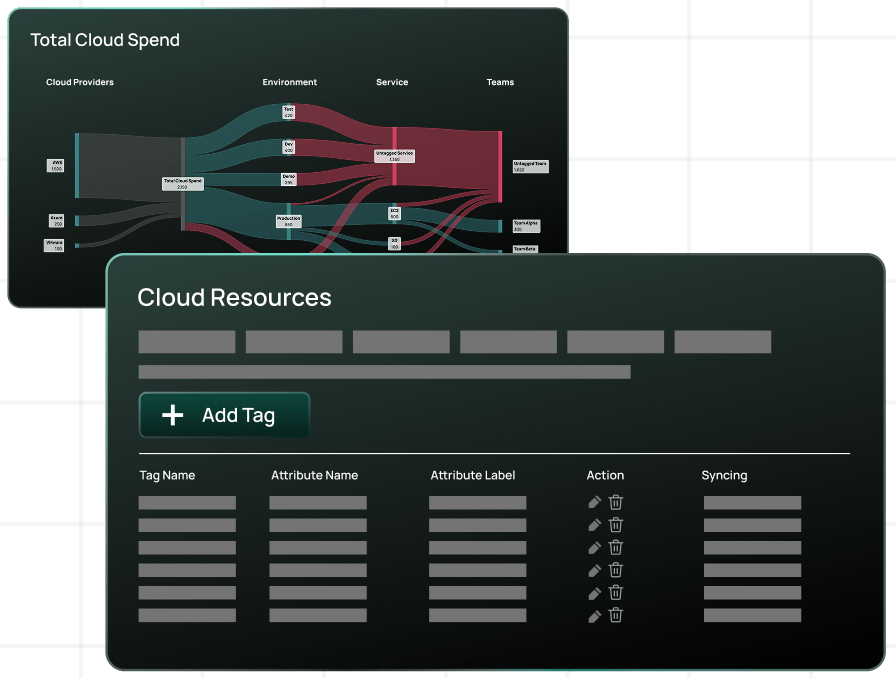
Tag compliance creates reconciliation challenges. AWS tags don’t inherit related resources. For example, launching an EC2 instance with proper tags doesn’t automatically tag associated EBS volumes or elastic IPs. Azure’s inheritance helps, but doesn’t work retroactively. GCP labels use different syntax, requiring normalization that maps Client:CompanyA to client=companya while maintaining consistent allocation rules.
Untagged resources represent persistent operational problems. Monitoring that identifies untagged resources within hours prevents allocation drift, but resources often exist for days before discovery. MSPs typically default untagged costs to overhead rather than retroactively attributing them, creating margin pressure when significant usage goes unattributed.
Cost center mapping and unallocated costs
Cloud resources align with organizational structures for CFO-level reporting, where costs roll up through hierarchical layers. A single EC2 instance might be allocated to Client A’s Production Environment within Enterprise Applications, with expenses rolled to both Client A’s P&L and the internal unit budget. Resources serving the entire MSP operation, development sandboxes, security infrastructure, and monitoring systems all require explicit policies. They absorb as overhead (reducing margins), distribute proportionally (raising all prices), or bill as platform fees (which clients often resist).
Real-time usage monitoring
Monthly billing cycles create information gaps where unexpected consumption accumulates invisibly until month-end. By the time MSPs discover cost overruns, intervention opportunities have passed, and conversations shift from proactive optimization to defensive damage control.
Continuous cost accumulation
Real-time monitoring tracks consumption at intervals matching operational risk tolerance. Hourly tracking catches anomalies within hours, while daily aggregation balances overhead with acceptable latency. The granularity determines detection speed. For example, if hourly monitoring flags an orphaned GPU instance within hours, daily aggregation might not surface the problem until the morning, after thousands of unnecessary costs have accumulated.
Patterns invisible in monthly aggregates become obvious with continuous tracking. For example, development teams forgetting to terminate afternoon test instances creates predictable daily spikes. Weekend costs remaining elevated when development stops indicate forgotten resources. Month-end batch processing creates expected spikes that shouldn’t trigger alerts, requiring baseline analysis to distinguish normal cycles from genuine anomalies.
Alert thresholds and anomaly detection
Multi-tier alerting escalates alerts based on severity and urgency. Informational alerts at 50% budget notify teams of normal progress, warning alerts at 75% prompt client check-ins, and critical alerts at 90% trigger immediate investigation. Thresholds account for billing cycle timing. They reach 50% on day 7 of a 30-day month warrants attention, while day 15 represents normal consumption. Trending alerts projecting month-end spending based on current burn rates provide earlier warnings than static thresholds.
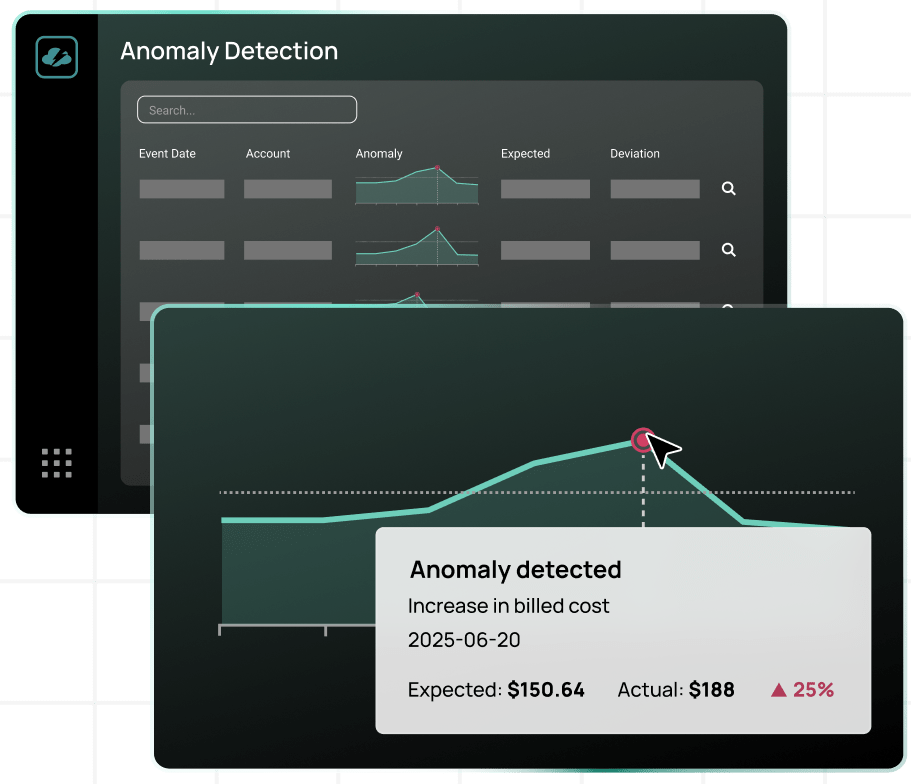
CloudBolt’s AI-driven capabilities detect spikes exceeding historical baselines by configurable percentages, filtering expected variations while flagging genuine anomalies. Machine learning models trained on historical patterns establish dynamic baselines adapting to gradual growth while remaining sensitive to sudden deviations. Anomaly attribution connects unusual spending to specific causes, such as:
- Application generated excess storage
- Which team provisioned resources
- Which workflow triggered the increase
It transforms generic “reduce spending” conversations into specific technical discussions with concrete solutions.
Flexible pricing models
Client relationships spanning different maturity levels, competitive pressures, and service complexity require varied pricing strategies. Platforms supporting only simple markups force MSPs into one-size-fits-all pricing that leaves margin opportunities untapped or prices them out of competitive deals.
| Pricing model | Primary use case | Structure | Margin considerations |
|---|---|---|---|
| Markup Percentage | Standard managed services | 20-40% above cloud costs | Simple, but the margin erodes with discounts |
| Fixed fee | Predictable workloads | Monthly flat rate + quarterly true-up | Requires accurate baseline forecasting |
| Tiered volume | Large deployments | Declining rates at spend thresholds | Incentivizes consolidation |
| Custom rate cards | Strategic accounts | Service-specific negotiated rates | Requires annual review cycles |
| Commitment-based | Long-term contracts | Discounted rates for minimum spend | Mirrors provider RI/SP programs |
Markup percentage dynamics
Percentage-based markups offer simplicity but can erode margins over time. The challenge stems from cloud providers’ ongoing price reductions—when your cost basis decreases, fixed percentages reduce absolute profit even as service delivery costs remain unchanged.
Consider a concrete example: A 25% markup on $10,000 in monthly cloud costs generates $2,500 in margin. When the cloud provider reduces prices by 15% (dropping the base to $8,500), that same 25% markup now yields only $2,125—a $375 margin reduction while your operational costs remain identical.
This dynamic requires service-level markup differentiation rather than blanket percentages. Basic infrastructure requiring minimal management might carry 20% margins, while 24/7-managed applications with active monitoring, optimization, and support justify 35-40% markups. The differentiation reflects actual service delivery costs rather than arbitrary pricing.
Fixed-fee and tiered structures
Fixed monthly fees eliminate invoice variability for clients who prioritize budget predictability over usage-based billing. The foundation is historical consumption data—calculate three-month rolling averages, add a 10-15% growth buffer to accommodate moderate increases, then establish the fixed monthly rate.
The critical component is quarterly reconciliation with defined thresholds. When actual consumption exceeds the fixed baseline by 20% or more, trigger a true-up adjustment and baseline recalculation. Below that threshold, the MSP absorbs the additional cost until the next quarterly review. This shifts usage risk from clients to service providers—acceptable when growth buffers are properly calculated, problematic when consumption spikes unexpectedly.
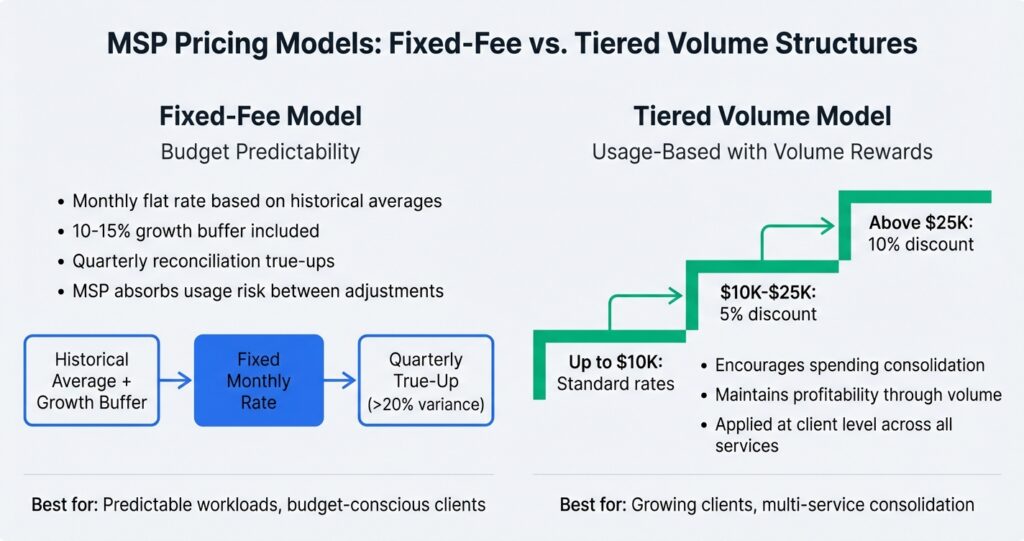
Volume-based discount tiers provide an alternative that maintains usage flexibility while rewarding consolidation. The structure uses spending thresholds with decreasing per-unit costs:
- Standard rates up to $10K monthly
- 5% discount from $10K-$25K
- 10% discount above $25K
The key decision is whether to apply tiers at the client level or service level. Client-level aggregation encourages consolidation across all cloud providers and services. A client splitting $30K monthly across three separate billing relationships receives standard rates on each $10K contract. Consolidating that $30K into a single relationship qualifies the entire amount for tier 3 discount rates—creating a financial incentive for consolidation while simplifying your billing operations.
Service-level tiering (applying discounts separately to AWS, Azure, and GCP spending) allows more granular pricing but reduces consolidation incentives and increases billing complexity. Most MSPs find client-level aggregation provides better business outcomes.
Custom cards and commitments
Strategic accounts require client-specific pricing deviating from standard models. CloudBolt’s margin control enables custom rates for specific instance types, storage tiers, and data transfer while maintaining automated workflows. Annual review cycles ensure rates reflect current provider pricing and maintain target margins. Custom rates negotiated years ago might exceed market rates, creating competitive vulnerabilities.
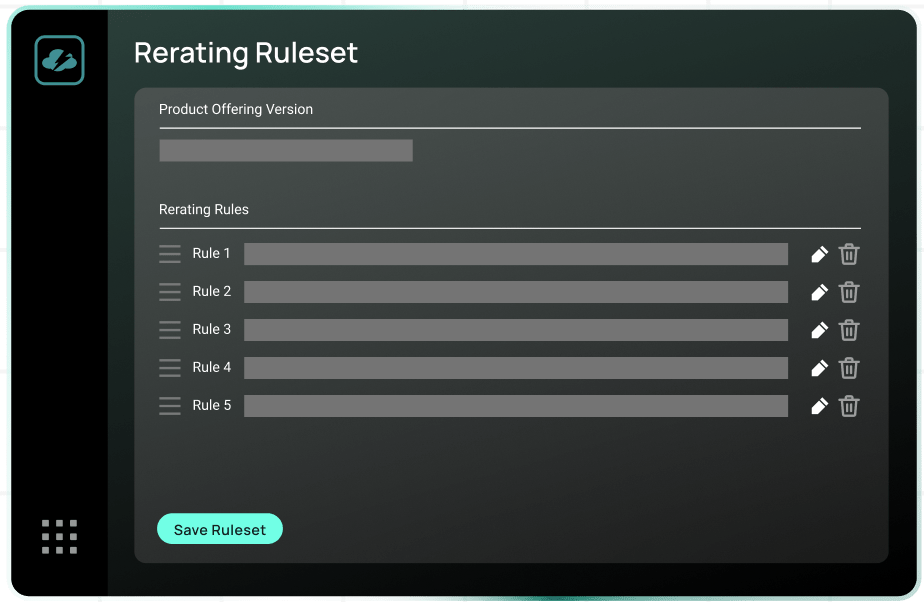
Commitment-based pricing offers discounted rates for minimum monthly spending, mirroring provider Reserved Instance programs. MSPs calculate discounts, ensuring they benefit from provider volume programs while sharing savings with clients. Utilization monitoring provides optimization recommendations: clients consistently exceeding commitments should increase minimums to secure better rates. Underutilization suggests reducing commitments or migrating to usage-based pricing.
Integration capabilities
Isolated billing systems create duplicate data entry, reconciliation overhead, and error multiplication across business systems. Integration architecture connects billing platforms with operational tools to maintain consistent data.
PSA and accounting synchronization
Professional Services Automation (PSA) systems such as ConnectWise, Autotask, or ServiceNow manage the entire client relationship. Billing integration exports cloud usage as billable items into PSA catalogues, enabling unified invoices combining cloud costs with labour and licenses.
Cloud resources map to PSA billing codes for proper revenue recognition, separating cloud resale margins from professional services. Bidirectional sync keeps client records, contracts, and billing accounts consistent. PSA updates propagate automatically to billing software, preventing drift that creates reconciliation problems.
Financial reporting requires billing data in general ledger format for QuickBooks, Sage, or NetSuite. The chart of accounts mapping assigns services to appropriate categories, EC2 costs map to “Cloud Infrastructure – COGS,” while client billings map to “Cloud Services Revenue.” Automated journal entries handle cost of goods sold, revenue recognition, and accounts receivable without manual accounting intervention. Reconciliation validation catches export errors before financial close by comparing platform totals to general ledger balances.
Cloud management and custom integration
Infrastructure orchestration platforms provision resources across multi-cloud environments. Billing software connecting to these systems correlates provisioning events with cost allocation. When teams deploy via CloudBolt or similar platforms, billing systems automatically inherit cost-tracking metadata, including client assignment and budget categories. Bidirectional integration feeds cost data back into management platforms, enabling cost-aware scheduling that considers price alongside performance.
MSPs with proprietary systems build custom connections using RESTful APIs. Webhook receivers process cost events in real-time. When costs exceed thresholds or anomalies occur, webhooks trigger immediate notifications without waiting for scheduled synchronization. Data export flexibility supports ad-hoc reporting in CSV, JSON, and Excel formats, with customizable fields, and scheduled delivery of monthly summaries, usage breakdowns, and allocation reports.
Automated chargeback workflows
Manual invoice generation introduces calculation errors, processing delays, and inconsistent practices, damaging client trust. Time spent creating invoices manually scales linearly with client count, creating operational bottlenecks as portfolios grow.
Invoice generation and usage processing
CloudBolt’s chargeback automation applies client-specific pricing to actual usage, calculates totals across providers, and generates detailed line items without manual calculation. Consumption broken down by provider, service category, and project enables meaningful analysis rather than single-line totals obscuring spending patterns. Review workflows where account managers approve invoices before distribution, catch allocation errors and anomalies before reaching clients.
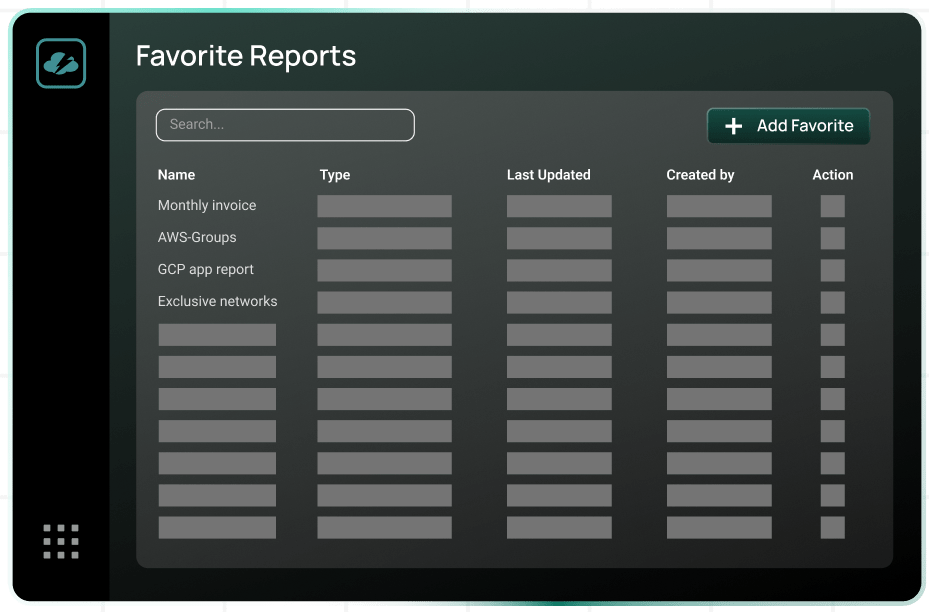
Processing consumption data daily or weekly rather than monthly provides running totals of current spending. Clients see accumulated charges updating continuously rather than waiting until month-end. Cloud provider billing delays complicate cycles.
- AWS finalizes invoices days after the month-end
- Azure adjusts usage up to 72 hours later
- GCP provides preliminary data that updates as metering completes.
MSP cycles must accommodate these timing differences to avoid reconciliation complications.
Approval workflows
Route high cost increases through approval processes before finalizing invoices. Define thresholds based on percentage variance or absolute amounts; Month-over-month increases exceeding 20% or $5,000 should trigger an account manager review. Configure escalation paths involving finance teams and executive leadership for exceptions exceeding higher thresholds.
Document approval decisions in audit trails with justification notes. When approvers accept unusual charges, record the business context explaining the increase, such as new project deployments, seasonal traffic spikes, or agreed infrastructure expansions. This documentation prevents recurring questions about historical invoices.
Showback, approvals, and portals
Cost transparency without an immediate billing impact serves clients who prefer visibility over formal chargebacks. Showback reports display the same data and calculations as invoices, but don’t generate receivables. MSPs use showback for internal cost centers, development environments, or trial periods before transitioning to billing. Identical frequency and detail as chargeback invoices ensure consistency when converting to billable services.
The high cost increases the number of approvals required before finalizing invoices. Thresholds based on percentages or absolute amounts, such as increases exceeding 20% or $5,000, trigger an account manager review with escalation paths for larger variances. Audit trails record approval decisions, with justification notes that explain increases, such as new deployments or seasonal spikes.
CloudBolt’s white-labelled portals enable MSPs to provide branded cost interfaces that let clients access consumption data, download invoices, and generate reports without contacting support. Role-based access controls restrict visibility to authorized users. Optimization recommendations highlight idle resources, rightsizing opportunities, and commitment discounts. Direct ticket creation from cost views streamlines billing inquiries by automatically attaching relevant data.
The MSP landscape is shifting fast. Hear experts discuss how to deliver what customers want most: better cloud spend optimization, automation, and multi-cloud flexibility.
Conclusion
MSP cloud billing software transforms fragmented multi-cloud cost data into automated billing operations that scale with client portfolio growth. Effective platforms consolidate usage across AWS, Azure, GCP, and private infrastructure through standardized APIs, accurately allocate shared resource costs via tag-based allocation, and automatically generate client invoices without manual calculation.
Successful implementations combine robust technical integration with flexible business models supporting diverse client pricing strategies. The capabilities outlined here enable MSPs to maintain precise cost control while delivering the transparent usage reporting that clients expect from managed service relationships. This systematic approach to billing infrastructure positions MSPs for profitable growth across increasingly complex cloud environments.


Related Blogs
Why Cloud Resource Optimization Is Moving Beyond Recommendations
Cloud resource optimization has typically followed this pattern: teams identify inefficiencies, generate recommendations, review them, and apply changes where it feels safe to…