Azure Cloud Solution Provider (CSP) billing presents unique challenges for managed service providers handling multiple client environments. Unlike direct enterprise agreements, Azure CSP billing involves complex partner-customer relationships, reconciliation processes, and margin management across diverse Azure consumption patterns.
Effective Azure CSP billing management requires understanding Microsoft’s billing cycles, implementing proper cost allocation mechanisms, and establishing transparent reporting for end customers. This article explains how to optimize Azure CSP billing operations, including automation strategies, cost-attribute methods, and best practices for maintaining profitability while delivering value to clients.
Summary of key Azure CSP billing concepts
The table below summarizes the Azure CSP billing concepts that this article will explore in more detail.
| Concept | Description |
|---|---|
| CSP billing structure | Azure CSP billing operates through partner-customer hierarchies with monthly reconciliation files, usage-based pricing, and partner margin management that differ significantly from direct Azure billing. |
| Cost allocation and tagging | Implement comprehensive tagging strategies using Azure Cost Management APIs and resource grouping to accurately attribute costs across multiple client environments and internal departments. |
| Automated billing reconciliation | Use Azure Partner Center APIs and third-party tools to automate monthly billing reconciliation, invoice generation, and cost reporting to reduce manual overhead and billing errors. |
| Multi-tenant cost management | Deploy cost management practices across multiple customer tenants, including budget alerts, spending thresholds, and automated reporting to maintain visibility and control over client consumption. |
| Margin optimization strategies | Leverage reserved instances, Azure Hybrid Benefit, and consumption-based pricing models to optimize partner margins while providing competitive pricing to end customers. |
| Billing automation and integration | Integrate Azure billing data with business systems through APIs and automated workflows to streamline invoice processing, cost allocation, and customer reporting across complex MSP environments. |
Stop losing time (and margins) to spreadsheets and manual reconciliation. CloudBolt’s Cloud Billing Platform gives you accuracy, automation, and control at scale—so you can focus on growing your business, not fixing billing errors.
Understanding Azure CSP billing architecture
Azure CSP billing architecture is primarily structured around Microsoft, not how MSPs run their business or report to their clients. Understanding the Azure CSP billing architecture is the first step toward fully understanding the implications for your business.
CSP program structure and monthly cycles
Azure’s CSP program operates through three partner types: direct providers who maintain billing relationships with Microsoft, indirect providers (distributors) who enable smaller partners, and indirect resellers who work through these distributors for billing infrastructure and support.
- Direct providers gain access to Partner Center APIs and manage their own Azure subscriptions, invoice generation, and customer relationships.
- Indirect resellers rely on indirect provider infrastructure for billing reconciliation while focusing on customer management and technical delivery.
- Indirect providers serve as intermediaries, aggregating multiple indirect resellers and handling complex billing reconciliation, payment processing, and technical support infrastructure that smaller MSPs cannot efficiently maintain on their own.
Microsoft generates reconciliation files on specific monthly schedules with usage aggregated at the subscription and resource level. These files contain metered consumption for compute, storage, network, and dozens of Azure services—each with distinct pricing models and billing granularities. A single customer tenant might generate thousands of line items monthly with no inherent grouping beyond subscription boundaries.
The reconciliation file structure presents immediate challenges. Usage appears at the meter level—specific SKU identifiers for individual Azure services—rather than organized by client-defined cost centers or project structures. MSPs handling 50+ customer tenants receive reconciliation files containing hundreds of thousands of individual usage records requiring transformation into structured, client-specific invoices.
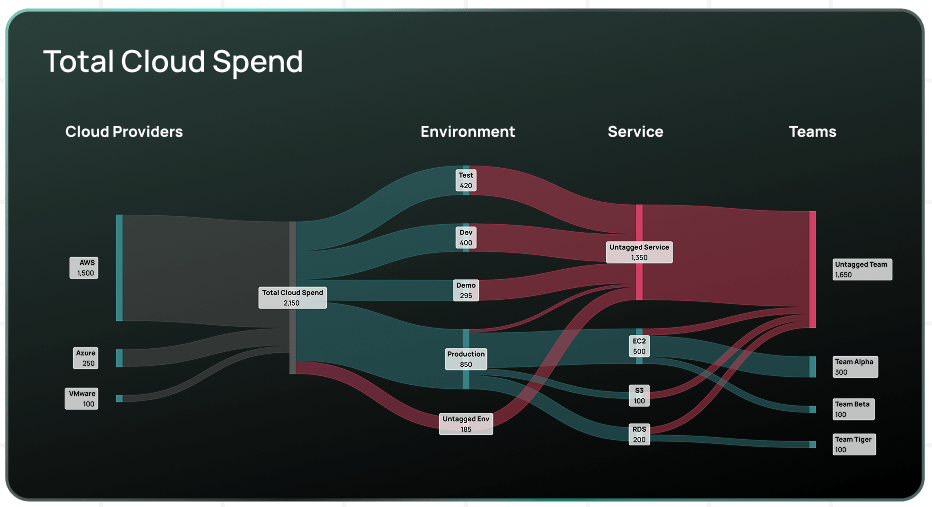
Reality Check: Many MSPs don’t realize how much margin they’re losing until they implement cost tracking at the resource group and service category level within each customer tenant. Subscription-level reporting masks the reality that shared infrastructure costs, support labour, and management overhead lack proper customer attribution, creating “unallocated” costs that reduce effective margins.
Partner margins and pricing models
Partner margins depend on the gap between Microsoft’s wholesale pricing and customer billing rates. Direct providers negotiate pricing tiers based on total consumption volume, creating opportunities to optimize margins as customer portfolios grow. The challenge lies in maintaining competitive customer pricing while preserving healthy margins across diverse consumption patterns.
Markup strategies vary by service type and customer segment. Compute resources typically support 10-25% markups depending on contract terms and value-added services. Specialized services like Azure AI and Machine Learning may command higher margins due to implementation complexity. Storage and network egress often operate on thinner margins, particularly for high-volume workloads where customers compare pricing across providers.
Rate card management becomes critical at scale. Different customers operate under distinct pricing agreements:
- Consumption-based pricing – Variable rates based on actual usage with precise metered consumption across services
- Fixed monthly fees with usage caps – Predictable billing with allowances for standard workloads plus overage charges
- Blended enterprise rates – Unified pricing across diverse Azure services requiring complex internal rate card logic
Applying correct rate cards to each usage line item—while handling reserved instance allocation and hybrid benefit licensing—requires systematic automation rather than manual processing.
Implementing comprehensive cost allocation
Cost allocations are essential to keeping your books in order and running an efficient MSP business. Effective tagging and resource organization can go a long way in getting your Azure CSP billing strategy right.
Tagging strategies and resource organization
Effective cost allocation starts with standardized tagging conventions applied consistently across customer tenants. Core tags should include customer identifiers, project codes, environment types, and cost center mappings. The challenge lies in enforcement—developers deploying resources through ARM templates, Terraform, or manual Portal operations often omit required tags or apply inconsistent naming conventions.
# Example: Azure resource group with required cost allocation tags
resource "azurerm_resource_group" "client_project" {
  name     = "rg-client001-webapp-prod"
  location = "East US"

  tags = {
    CustomerID   = "CLIENT-001"
    Project      = "WebApp-Migration"
    Environment  = "Production"
    CostCenter   = "Engineering"
    BillableStatus = "Billable"
  }
}

# VM inheriting tags with additional metadata
resource "azurerm_linux_virtual_machine" "app_server" {
  name                = "vm-webapp-prod-01"
  resource_group_name = azurerm_resource_group.client_project.name
  location            = azurerm_resource_group.client_project.location
  size                = "Standard_D4s_v3"

  tags = merge(
    azurerm_resource_group.client_project.tags,
    {
      Workload = "Application-Server"
      Owner    = "ops-team@client001.com"
    }
  )
}
Azure Policy enables tag enforcement at the subscription or management group level, blocking resource deployment when required tags are missing. However, policy enforcement alone doesn’t guarantee correct tag values. Automated validation workflows should verify tag compliance against approved value lists and flag discrepancies before month-end reconciliation.
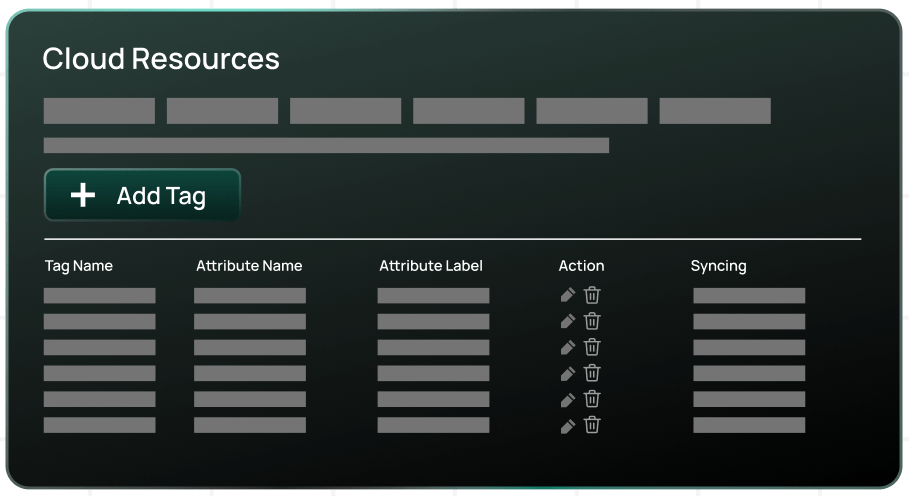
Resource groups provide natural billing boundaries when aligned with allocation requirements. MSPs should organize resources by the granularity required for client invoicing, with separate resource groups for each billable project, to provide cleaner cost attribution than mixing multiple billing targets within a single group. Subscription-level organization amplifies this benefit. Separate subscriptions per business unit allow cost rollup without complex tag-based allocation.
Allocation principle: Build rules once and apply them across clients. Allocation logic should be reusable, transparent, and self-documenting. When new customers are onboarded, their shared infrastructure allocation rules should apply automatically rather than requiring custom monthly calculations.
API Integration and multi-dimensional tracking
Azure Cost Management APIs provide programmatic access to usage data, enabling automated retrieval without manual Partner Center downloads. For CSP partners managing many customer tenants, this means dozens of separate API calls monthly to gather complete billing datasets.
# Fetch usage data for specific customer tenant
usage_data = consumption_client.usage_details.list(
    scope=f'/providers/Microsoft.Billing/billingAccounts/{billing_account}/customers/{customer_id}',
    filter=f'properties/usageStart eq 2024-01-01'
)
Critical gap: MSPs often use Azure APIs to retrieve usage data but still struggle to map that usage to rate cards, contract terms, or margin models. The API returns Microsoft’s meter IDs and consumption quantities—not client-specific pricing structures needed for invoice generation.
Effective MSP billing requires cost visibility across multiple dimensions: by customer, project, environment type, and service category. This demands data warehouse approaches with dimensional models that support queries such as “show all production compute costs for Customer A’s Project X.”
CloudBolt helps MSPs and distributors automate billing from end to end, eliminating manual reconciliation and unlocking margin protection at scale.
Explore Reselling & Distribution Capabilities to see how.
Automated billing reconciliation processes
Automating the billing process helps keep MSP back office operations running smoothly. In this section will look at how Azure Partner Center APIs and third-party tools can help automate Azure CSP-related billing workflows.
Partner Center API integration
Partner Center APIs enable programmatic access to CSP billing data. The Invoice API returns monthly billing documents, while the Usage API provides detailed consumption records. The workflow follows a systematic process:
- Authentication setup – Service principal credentials establish secure programmatic access
- Customer portfolio retrieval – Enumerate all customers within the partner’s CSP account
- Subscription-level data collection – Fetch detailed usage records across all Azure subscriptions
- Meter extraction and pricing – Extract meter quantities, unit prices, and total charges
- Pipeline processing – Route extracted data into downstream allocation and invoice generation
Usage file processing and rate card application
Reconciliation files contain thousands of line items per customer, monthly. Processing at scale requires normalizing meter identities across Azure services into consistent categories (Compute, Storage, Network, Database, etc.), enabling aggregation without manually mapping hundreds of meter types.
Processing challenge: Transform large multi-tenant reconciliation files into structured billing data through streaming approaches rather than loading entire datasets into memory. Files containing hundreds of thousands of usage records exhaust available RAM on standard infrastructure.
Streaming processors handle each usage record sequentially, applying transformations and routing records to appropriate billing categories without requiring full dataset materialization. This approach maintains consistent performance regardless of file size.
Next comes tag extraction and validation. Usage records include tag metadata when resources were properly tagged, but tags appear as freeform key-value pairs rather than structured fields. Processing pipelines should parse tag data, validate it against expected values, and flag records missing required tags for manual review before finalizing billing.
Rate card management demands version control and temporal tracking. Customer pricing changes mid-month when contract renewals occur or promotional periods expire. Billing systems should support time-based rate card activation, applying old rates before change dates and new rates afterward. Without temporal versioning, mid-month price changes force manual corrections across usage datasets.
Validation and system integration
Automated validation catches problems before invoice delivery:
- Cost reconciliation totals – Sum of allocated costs must equal reconciliation file total
- Rate card completeness – All usage records require matching rate card entries
- Budget threshold monitoring – Customer totals compared against limits for proactive alerting
- Allocation coverage validation – Tag-based allocations should cover 100% of usage
- Currency consistency – Invoice currency must match the customer contract currency
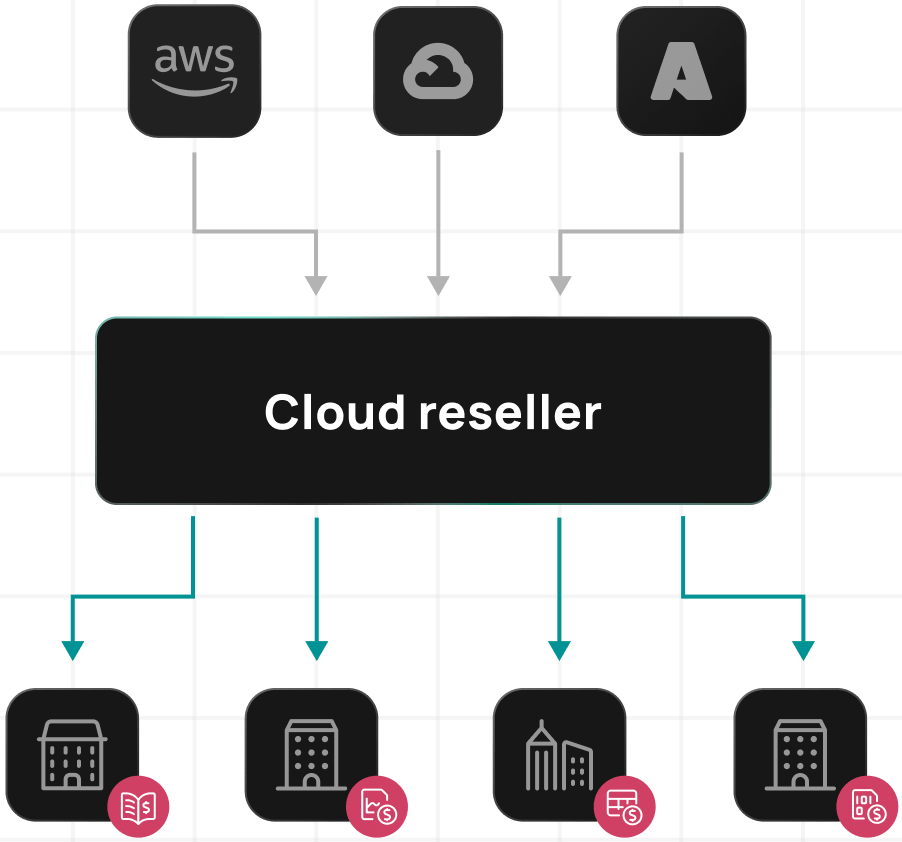
Multi-cloud billing platforms address this complexity with unified data collection architectures. CloudBolt’s integrated cost reporting aggregates usage data from Azure Cost Management APIs, AWS Cost Explorer, and GCP Billing Export into centralized datasets accessible through single-pane dashboards. This consolidation eliminates separate reconciliation workflows per cloud provider while providing consistent cost visibility across hybrid customer environments.
Multi-tenant cost management and monitoring
MSPs need robust cost management and monitoring across all of their clients. In this section, we’ll drill into how MSPs can implement budget alerts, spending thresholds, and automated reporting to keep tabs on client consumption.
Cross-tenant visibility and budget controls
Azure Lighthouse enables service providers to manage multiple customer tenants with delegated access, without separate authentication for each customer. However, Lighthouse provides management plane access—not automatic cost aggregation. Building unified cost monitoring requires additional integration with Azure Cost Management APIs to programmatically retrieve and consolidate billing data from each customer tenant into centralized reporting dashboards.
Building effective cross-tenant dashboards requires normalizing data from diverse customer environments. Each customer might deploy different Azure services, use different subscription structures, and follow distinct cost management practices. Dashboards should support filtering by customer, service type, cost center, or time period while maintaining performance when aggregating data from 50+ tenants simultaneously.
Azure Budgets support threshold-based alerting at subscription or resource group scope. MSPs should deploy budget monitoring across customer tenants with alerts notifying both provider operations teams and customer stakeholders when spending reaches defined percentages of monthly allocations.
Budget alert latency affects operational response due to Azure’s billing data processing pipeline. While budgets evaluate spending daily, the underlying usage data itself has processing latency—costs incurred on a given day may not appear in Cost Management APIs for 8-24 hours. This compound delay means budget alerts can lag actual resource deployment by a full day or more.
Anomaly detection and real-time tracking
Cost anomalies signal misconfigurations, security incidents, or unexpected workload scaling. Sudden VM compute spikes might indicate crypto-mining malware. Unusual storage egress could reveal data exfiltration. Manual anomaly detection doesn’t scale across large portfolios—MSPs need automated systems that baseline normal consumption patterns and flag deviations exceeding statistical thresholds.
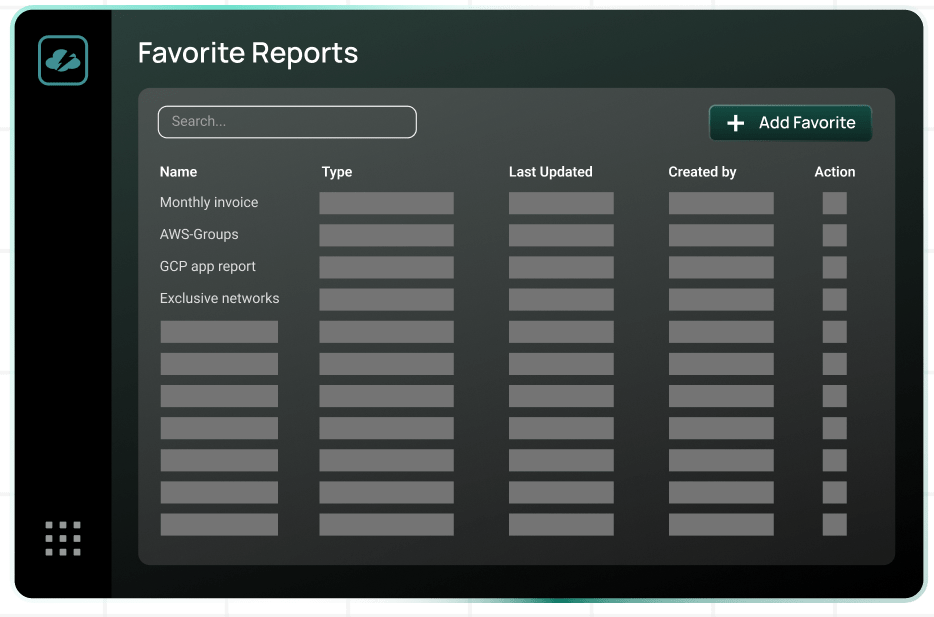
Hierarchical billing platforms automate multi-level cost structures through configurable allocation rules. CloudBolt’s chargeback system allows MSPs to define parent-child relationships between customer organizations, business units, and projects with automatic cost rollup at each hierarchy level. This organizational flexibility supports complex billing scenarios without custom allocation logic per customer.
Preventive cost controls
Proactive cost management prevents budget overruns before they appear on invoices. Azure provides multiple policy-driven mechanisms that MSPs can deploy across customer tenants:
- Deployment restrictions – Azure Policy blocks expensive VM SKUs in non-production environments, enforces geographic restrictions to avoid premium-priced regions, and requires approval workflows for high-cost services before provisioning.
- Tag enforcement – Required tagging policies ensure all resources carry cost allocation metadata from creation, preventing unattributable usage from appearing in month-end reconciliation.
- Budget thresholds – Subscription and resource group-level alerts provide early warnings before spending exceeds allocated thresholds, enabling intervention during the billing cycle rather than after.
Policy-driven platforms extend these native controls with automated remediation. CloudBolt’s continuous optimization automatically detects policy violations and executes corrective actions—deallocating idle resources, rightsizing oversized instances, or scheduling non-production workloads to reduce costs—without requiring manual intervention for each customer tenant.
Margin optimization and pricing strategies
This section breaks down a few key tactics MSPs can use to optimize partner margins while keeping prices competitive.
Reserved instances and commitment management
Reserved instances (RIs) provide substantial discounts in exchange for one-year or three-year commitments. Discount levels vary by service—specific VM families and Azure SQL Database can reach up to 72% savings, while other services offer 30-50% reductions compared to pay-as-you-go rates. For MSPs, RI management involves forecasting customer workload stability, purchasing appropriate instance types and regions, and correctly attributing RI benefits to customer billing.
Optimization reality: The difference between “technical optimization” and “business optimization” is crucial. Identifying RI or Hybrid Benefit opportunities provides value only when connected to actual client pricing and margin impact.
RI purchases under CSP require partners to commit upfront capital on behalf of customers. Unlike enterprise agreements, where customers purchase RIs directly, CSP partners must decide whether to consolidate RI purchases across multiple customers for volume benefits or isolate them by customer for clearer accounting. Consolidated approaches maximize discount percentages but complicate margin tracking when RI benefits apply to multiple customer workloads.
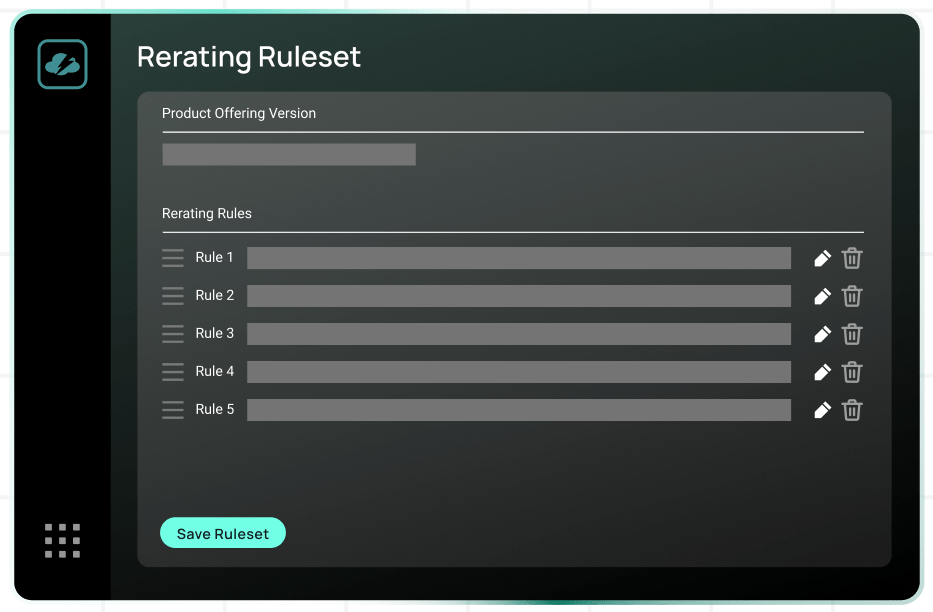
Instance size flexibility in Azure RIs allows reservation benefits to apply across VM sizes within the same family. This flexibility reduces RI waste when customer workloads shift between instance sizes, but tracking which customers received RI benefits requires detailed usage analysis.
Azure Hybrid Benefit and dynamic pricing
Azure Hybrid Benefit allows customers with existing Windows Server or SQL Server licenses to use those licenses for Azure workloads at reduced rates. MSPs must verify customer licensing entitlements, track license consumption across hybrid deployments, and ensure compliance during Microsoft audits.
Dynamic pricing models balance predictable customer costs against actual consumption patterns. Fixed monthly pricing provides budget certainty but exposes MSPs to margin risk when consumption exceeds forecasts. For example, an MSP charging $5,000 per month to a customer who unexpectedly consumes $6,500 in Azure resources incurs a $1,500 loss, eroding the planned margin.
Hybrid approaches—fixed base fees covering minimum infrastructure plus consumption charges for scaling—balance these competing concerns.
Advanced billing automation and system integration
For MSPs with mature billing workflows, several advanced automation and system-integration strategies can help you optimize your back-office processes.
Complete billing pipeline architecture
Full billing automation pipelines implement multi-stage workflows, transforming raw cloud usage into finished invoices:
- Pull usage data – Ingest from Partner Center, Azure, AWS, GCP on scheduled intervals
- Normalize formats – Standardize diverse cloud provider data structures into unified schemas
- Allocate and price – Apply customer-specific business logic through rule engines
- Generate invoices – Aggregate allocated usage with branded templates in multiple formats
- Push to PSA and ERP – Integrate with accounting systems through APIs or file exports
- Deliver and track – Automate distribution workflows and capture delivery confirmations
- Export to dashboards – Provide internal analytics and customer-facing portals
- Automate reconciliation – Compare invoices against reconciliation files, route discrepancies to exception queues
Multi-cloud consolidation and predictive analytics
MSPs serving customers across multiple cloud providers face compounded complexity. Each cloud provides different billing APIs, usage data formats, and pricing structures. Customers operating multi-cloud environments expect consolidated invoices that show total cloud spend, regardless of the underlying provider distribution.
Multi-cloud consolidation requires provider-agnostic data models that represent compute, storage, and network in a similar way, regardless of the underlying provider. The billing system should handle Azure VMs, AWS EC2, and GCP Compute Engine through common abstraction layers, enabling aggregated reporting and consistent application of pricing logic. Rate card management becomes more complex—customers might negotiate different markup percentages by cloud providers based on support requirements or strategic sourcing relationships.
Policy-driven platforms enable waste elimination through configurable telemetry analysis. CloudBolt’s continuous optimization detects underutilized resources across Azure, AWS, and GCP through a unified monitoring infrastructure. Automated rightsizing recommendations appear in centralized dashboards alongside cost-attribution data, enabling MSPs to identify optimization opportunities and immediately understand margin impact across customer portfolios.

ML-based forecasting differentiates modern platforms from basic billing aggregators. CloudBolt’s predictive budgeting analyzes historical consumption patterns across customer portfolios, accounting for cyclical variations, growth trends, and seasonal factors. Forecast accuracy improves operational planning—MSPs can predict quarterly revenue within tight confidence intervals while customers receive early warnings when spending trends exceed budgets.
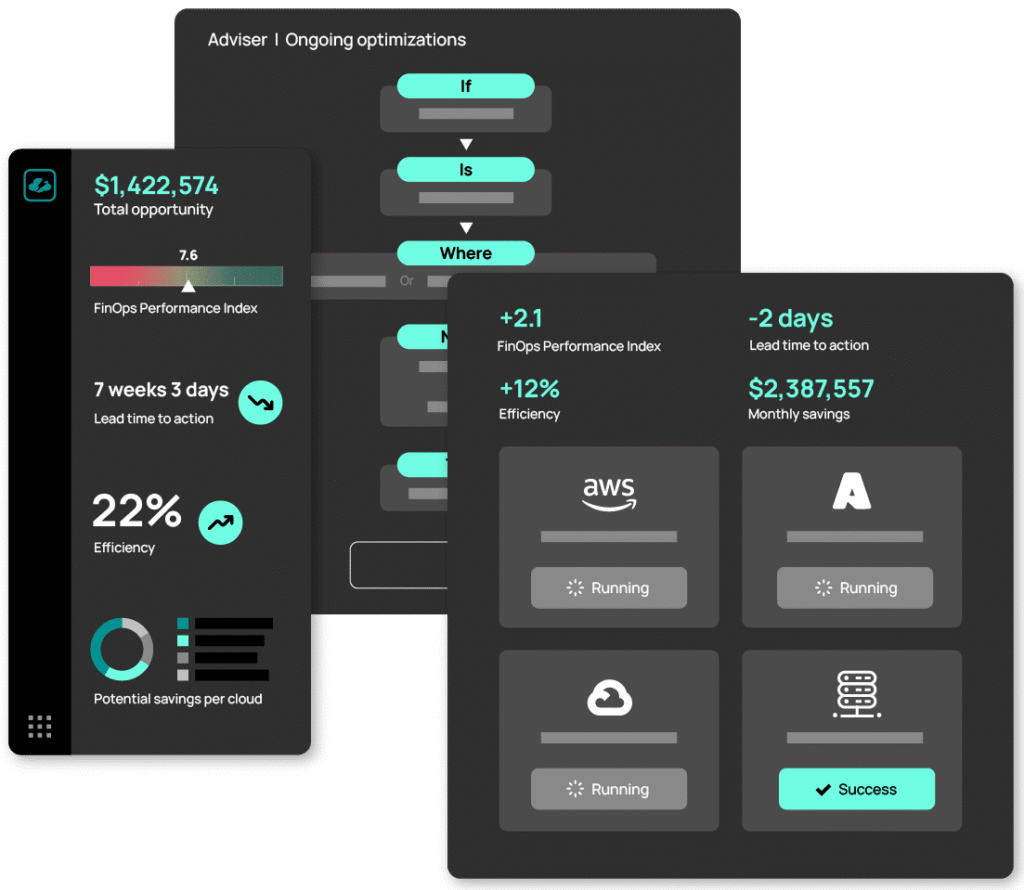
Anomaly detection integrates with predictive models to identify consumption deviating from forecasts. When actual spending exceeds forecasted ranges, automated alerts notify both MSP operations and affected customers. These notifications should distinguish between forecast model inaccuracy requiring retraining and genuine consumption anomalies, potentially indicating misconfigurations or security incidents.
Performance and exception handling
Billing systems processing hundreds of customers and millions of monthly usage records face performance constraints. Database query optimization, caching strategies, and distributed processing architectures enable acceptable response times as customer portfolios grow.
Despite comprehensive automation, edge cases require human intervention. Billing systems should route exceptions to review queues rather than halting entire billing cycles. Exception types include unmapped meter IDs requiring new rate card entries, allocation rule failures when resources lack required tags, or customer-specific contract terms not handled by standard pricing logic.
The MSP landscape is shifting fast. Hear experts discuss how to deliver what customers want most: better cloud spend optimization, automation, and multi-cloud flexibility.
Conclusion
MSPs handling Azure CSP billing manually spend dozens of hours monthly on reconciliation and invoice generation. Automated billing pipelines eliminate this overhead while providing real-time margin analysis and customer profitability insights that manual processes cannot deliver.
Scale Consideration: As customer portfolios grow, manual billing overhead increases in proportion to the customer count. Processing 200 customers manually takes four times longer than processing 50 customers. Automated systems handle 200 customers with effort similar to 50, concentrating human time on exception handling and margin analysis instead of data processing.
Modern billing platforms consolidate these capabilities into integrated solutions, eliminating the need for MSPs to build custom infrastructure from scratch. Evaluating platforms based on multi-cloud support, allocation flexibility, and system integration depth helps identify solutions that match specific MSP operational requirements and growth trajectories.


Related Blogs

What actually happens when a workload OOMs in production
The pager goes off at 2:47 AM. CrashLoopBackOff on a payment service. The on-call rolls over, opens a laptop, runs…